Dylan likes to play with the meaning of words. And he does this with the word “hard.” Hard can mean a surface that’s not soft or something complex. One of the things I love about Dylan is where his words take me. And the road that leads me to thinking he means one sense of a word and then makes me start to think he means another is the poetic road worth my traveling.
He tried to explain about how “Hard Rain” is not about atomic or fallout rain, it’s just a hard rain, “an end that just has to happen.” Well, hard rain also conjures images of missiles, weapon launches and catastrophic landings, twisted metal and steel shrapnel falling from the sky. But maybe he really meant hard as in complex; the hard rain that’s gonna fall perhaps is hard because after what we’ve done to our environment with pollution this will not be a simple rain–a hard to figure out what it is rain, or worse, what it will do, a rain based on “lies,” the poisoning of our minds.
Here’s the interview with Studs Terkel in which Bob talks about the song’s meaning (he sings it first and then talks about it around 11:00):
The words that rhyme with “hard” in “Life Is Hard” are all names of hard subjects, except for the first one:
I’m always on my guard
Admitting life is hard
Schoolyards and boulevards are hard, concrete and blacktop abound in them. And being locked and barred has a hardness to it to the touch. But to be on guard is not hard yet it signifies a rigidness. All told the “hard” rhymes Dylan creates in the song have a nice range of feeling to how life is hard, the sensation of life’s hardness is conjured by the sensations of hard substances and how one feels when on guard.
Exasperation is the tone in “Narrow Way.” The bridge underscores this:
It’s a long road, it’s a long and narrow way
If I can’t work up to you, you’ll surely have to work down to me someday.
The narrow way is biblical, i.e., Matthew 7:14, “”For the gate is small and the way is narrow that leads to life, and there are few who find it.” Struggle to get somewhere, yes, but there’s in the song a resistance or an unwillingness to put up with the situation (whatever it is) being so difficult to achieve. So the speaker holds the other accountable–if I can’t get there, you gotta meet me at least halfway.
Threats are present, too–this is not a voice of supplication or subservience–the terrific “hard“/”unscarred” rhyme is an example”
I’m armed to the hilt, and I’m struggling hard
You won’t get out, of here unscarred.
This is a lashing out against someone, maybe a some thing or even a deity. It’s a Dylan whose bell still rings with its voice of revolt and invectives hurled in rhymes.
I discussed the “hard” rhymes recently in “Temporary Like Achilles,” in my “Guard” post. “hard” pulsating the rhyming through the song certainly helps the a sexual connotations in the song, especially rubbing up next to the word “Temporary” in the title. It is unusual for Dylan to use the “hard“/”guard” rhyme twice in the last two verses:
Just what do you think you have to guard?
You know I want your lovin’
Honey, but you’re so hard
How come you get someone like him to be your guard?
You know I want your lovin’
Honey, but you’re so hard
Maybe “hard” is a hard word to rhyme after all. From Blonde on Blonde to Life is Hard is a long stretch without a “hard” rhyme. May have to use the same rhyme twice when you’re trying so hard to rhyme words with “hard.”
Logical auto rhyme (word rhyming with itself) dominates “Obviously Five Believers” which make the full rhymes stand out. “yard”/”hard” is one of those stand out rhymes in the song:
I got my black dog barkin’
Black dog barkin’
Yes it is now
Yes it is now
Outside my yard
Yes, I could tell you what he means
If I just didn’t have to try so hard
Funny thought that–how hard it is to tell what your dog’s barking means? Or does it? “Just let me in, will ya” could be the extent of the depth of meaning. Yes, obvious, unless you try to hard.
Christopher Ricks in Dylan’s Visions of Sin talks about “Subterranean Homesick Blues” in the context of Hamlet’s Polonius giving advice to Laertes in “maxim-packed lines.” “SHB” is “maxim-packed,” full of advice for, as Ricks says, the more cynically inclined, but advice nonetheless. And advice can be hard to take (double-meaning intended), especially if its not what you want to hear, like that trying hard won’t necessarily give you any rewards:
Get sick, get well
Hang around a ink well
Ring bell, hard to tell
If anything is goin’ to sell
Try hard, get barred
We love this song for its fantastic rhyming, and we may remember it mostly for its end of line rhymes, but the internal rhyming as in the above passage is so good it turns the song from being a “maxim gun,” as Ricks calls it, into a rhyming cannon, the first rap song, firing away the powerful sounds of rhyming.
Here’s a clip of Dylan singing the song used to display the speed of “Google Instant”–check it out and you’ll see and hear how easy it is to, as the Bastard says in Shakespeare’s King John,” “never [be] so bethumped with words”:
“My Back Pages” is deep, “Foundationed deep” even, but it has bursts of incisive clarity what with moments like, “Rip down all hate,” bumper sticker slogans, but like many if not all abstractions they are easier said in theory, hard in practice, live by, or t0 fulfill.
Not hard is the self-awareness the song expresses, not the least of which comes form the memorable refrain,
Ah, but I was so much older then
I’m younger than that now
The “hard” rhyme is internal, and appears with “guard” in the last verse:
Yes, my guard stood hard when abstract threats
Too noble to neglect
Deceived me into thinking
I had something to protect
Good and bad, I define these terms
Quite clear, no doubt, somehow
Ah, but I was so much older then
I’m younger than that now
“Quite clear, no doubt,” but to whom? Himself? Those abstract threats spoken of can deceive, with the line of thought going to “I had something to protect.” “Rip down all hate” might get you thinking you have something to protect, like your own hatred, admittedly, confessed, but that’s an older way of thinking that, better to be younger in mind, seeing ripping down all hatred as an invitation, not a threat.
Dylan, live in Glasgow, 1995, singing this cherished song:
I’m touched every time I watch No Direction Home and hear Allan Ginsberg confess that he wept the first time he heard “Hard Rain.” And it wasn’t for the song itself, but for poetic baton that he felt was being passed from his generation to Dylan’s. This was how powerfully the song struck him.
Of course, “hard” is all over the place in the song . . . correction–more accurately it appears five times at the end of all five verses. Five as in 5 Acts, and with all the dialogue it can be perceived as a play. It is great theater.
The only time “hard” is rhymed with another word is at the end of the first verse with “graveyard”:
Oh, where have you been, my blue-eyed son?
Oh, where have you been, my darling young one?
I’ve stumbled on the side of twelve misty mountains
I’ve walked and I’ve crawled on six crooked highways
I’ve stepped in the middle of seven sad forests
I’ve been out in front of a dozen dead oceans
I’ve been ten thousand miles in the mouth of a graveyard
And it’s a hard, and it’s a hard, it’s a hard, and it’s a hard
And it’s a hard rain’s a-gonna fall
I think it’s a cue–the rhyme sets us up for the death imagery and harbinger of death that pervades over the whole song with its warnings and threats.
Here’s a version with full orchestra accompaniment. See if it makes you want to weep or pass a baton.
I like to think of Bob Dylan, as a guard, a sentinel, a sentry of sorts. I’ve always anticipated each album release as a chance to see how Dylan looks at our world. His mind’s eye matters to me. What he watches over, what matters to him enough to write and sing about is what he guards for those of us who have followed him for years.
If you glance at some of his album covers over the years, he looks like a guard, watching and looking out for us. As in The Times They Are a Changin:
That downward stare emanates disdain, scorn for what he sees, but it’s a look of contemplation, too, as if what’s worse is what the world is forcing him to think about.
And here he is again on the cover of Highway 61, sitting as if in his rock star throne, just dying to ask “How does it feel?” to just about anyone who approaches:
And is it any surprise that on an album with “Changing Of The Guards” that Dylan would be seen standing in a doorway on the lookout for who or what knows what:
Maybe admitting anything is hard. Burden it with admitting your life is hard, or that you think in general life is hard, then add admitting to someone life is hard without them. Not so hard, well, maybe it’s something hard to admit to one’s self, especially when you’re alone and that person is nowhere near you:
I’m always on my guard
Admitting life is hard
Without you near me
Just to survive such admission might be dangerous, what if I can’t go on? I may need the “strength to face that world outside.” It’s a sad song, “Life is Hard,” days are barren, hearts are locked away.
Be on guard for what you may admit to when you’re forced to face the world on your own, like a rolling stone:
Dylan takes awhile to sing the title line in “Changing of the Guards,” 8 verses out of 9, to be exact. Only one word rhymes, with “guards,” because it only appears once, and that word is “cards”:
Gentlemen, he said
I don’t need your organization, I’ve shined your shoes
I’ve moved your mountains and marked your cards
But Eden is burning, either brace yourself for elimination
Or else your hearts must have the courage for the changing of the guards
Such a rhyme is done with the flick of wrist, a magician’s card trick, as the words don’t look like they should rhyme–unlike words like “cough” and “dough,” or even better in this context, “card” and “ward,” which look they should rhyme.
Things that look like they don’t but do. Maybe that prepares us for that last verse, the ninth:
Peace will come
With tranquillity and splendor on the wheels of fire
But will bring us no reward when her false idols fall
And cruel death surrenders with its pale ghost retreating
Between the King and the Queen of Swords
A live version from 78, the year the album was released.
You love someone but he/she sends you no regards, sends someone out to have you barred . . . now that’s pretty hard to deal with. In “Temporary Like Achilles,” things get harder and harder for the would be lover, while the words that rhyme with hard keep piling up. “heart” and “hard” have a kind of assonance, and the heart being referred to is questioned as being made of stone, solid rock even. The “guard” rhyme with “hard” helps phrase the deepest question, puts it back on the object of the devotion:
Just what do you think you have to guard?
You know I want your lovin’
Honey, but you’re so hard
If nothing else gets her (assuming gender) to let down her guard this might, but if the guard is actually someone like Achilles, well this is going to get even harder:
Achilles is in your alleyway
He don’t want me here, he does brag
He’s pointing to the sky
And he’s hungry, like a man in drag
How come you get someone like him to be your guard?
You know I want your lovin’
Honey, but you’re so hard
Now Achilles is rock solid hard, all brawn, but he once did dress in drag, ordered to by his mother to make him avoid going to war. But he was hungry for battle, his nature was to be a warrior. Capture Achilles in that moment of his myth and make him your guard? Well that’s bound to be temporary. Maybe there’s hope in breaking down or losing that guard altogether after all.
Back to the myth: here is a painting from Greek Mythology Link of the moment when Odysseus discovers Achilles’ disguise:
The beginning of this blog post depicts Dylan as a guard, a sentry, and the internal rhyme with “guard” makes a similar association:
Yes, my guard stood hard when abstract threats
Too noble to neglect
Deceived me into thinking
I had something to protect
Good and bad, I define these terms
Quite clear, no doubt, somehow
Ah, but I was so much older then
I’m younger than that now.
But he’s not speaking of a guard in the sense of a sentinel or sentry; the guard here is his resistance, his ability to stay on guard, but the image of his guard standing hard creates the image of a guard, his guard is kept up hard like a person standing guard, this in the face of “abstract threats” made him believe he “had something to protect” which is what guards do. This is terrific wordplay, stretching the meaning of “guard” to multi-meanings, or two at least, and ignited, by the rhyme word “hard.”
Here’s Bob performing this excellent song in Glasgow, 1995. Listen for the crowd chiming in on the chorus.
In the last verse of “George Jackson,” Dylan rhymes “yard” with “guards,” the last words of lines 2 and 4:
Sometimes I think this whole world
Is one big prison yard
Some of us are prisoners
The rest of us are guards
Lord, Lord
They cut George Jackson down
Lord, Lord
They laid him in the ground
This is the rhyming pattern in the song; each 2nd and 4th lines end in a rhyme. Otherwise, the rhyming is limited to the “down”/”ground” one that ends each verse.
In the “yard”/”guard” rhyme Dylan does was one of his “either one or the other” a la “Well it may be the devil or it may be the Lord . . .” binary in “Gotta Serve Somebody.” This one has teeth though; indeed the world as “one big prison yard” and we as either prisoners or guards is convincing, as is the way Joan Baez sings the song:
There’s a moment in his 1965 press conference in San Francisco when Dylan says, “It doesn’t mean anything.” It’s an exceptional moment from an interview that’s typically evasive, amusing, giddy, and glib, the usual fodder from early Dylan interviews, but I think it’s candid and truthful. He understands and wants to express the meaninglessness.
To some extent, the cannon of Dylan is really an attempt to figure out what things mean. Songs like “Ballad Of A Thin Man,” “Things Have Changed” and “Brownsville Girl” address the searching for meaning directly. In others, there’s a straining to know what things mean, or worse, meant. What something or even someone used to mean is a harder question even than what something or someone means. His love songs are painful because they address what someone meant to the speaker, something that can never have the same meaning again. Other songs are amusing and deep because the search for meaning in them holds up a mirror to the absurdity of searching for any meaning at all.
Come with me on this journey to find out what meaning “meant” as a rhyming word can have in Dylan’s songs.
In “Life Is Hard” “meant” rhymes with “went” and the meaning known is what two things used to mean but not what they mean now; those two things are the will and the way:
The evening winds are still
I’ve lost the way and will
Can’t tell you where they went
I just know what they meant
I’m always on my guard
Admitting life is hard
Without you near me
The will and the way are lost, but not their meaning from the past. The past is tied to being near someone who used to give him a way and a will, perhaps. Such nearness is essential. We underestimate the value of nearness; in this song, such nearness is essential; it’s echoed in the bridge, four times:
Admitting life is hard
Without you near me
The songs celebrates nearness, in a sense, for what happens without it.
One of my favorite songs is “The Nearness of You.” It helps me value and celebrate nearness. Here’s Sarah Vaughn singing it in 1949, a song originally sung by Gladys Swarthout for the film Romance in the Dark (1938) and written by Hoagy Carmichael and Ned Washington:
The clever “sent to me”/”meant to be” rhyme in the third verse of “The Groom’s Still Waiting At The Alter,”
Try to be pure at heart, they arrest you for robbery,
Mistake your shyness for aloofness, your silence for snobbery,
Got the message this morning, the one that was sent to me
About the madness of becomin’ what one was never meant to be.
signals a theme to come. The phrase “never meant to be” has resonance in the following verses where Claudette is “slandered and humiliated,” having the power one night only to not having the power to keep it the next day, and the best never meant to be or meant to be fate: Claudette “respectably married or running a whorehouse in Buenos Aires.”
What you were not meant to be as a kind of madness has depth and insight, but how do we know what we were meant to be in a world where so much is misread, misunderstood, misinterpreted: “shyness for aloofness,” “silence for snobbery”?
Dylan sings the song with energy, animation, rage even, like he means it:
He came and went. He was here but now he’s gone. Many Dylan songs are about comings and goings, arrivals and departures. Most of them have to do with lost loves, relationships gone south but with the yearning for them still in place (“Most Of The Time“) or the suffering from the yearning expressed (“Love Sick“). The need to travel on, move ahead, be gone, sever ties, are shared in them, painfully sometimes, if not most times. “Boots Of Spanish Leather,” “One Too Many Mornings,” Down The Highway,” “Tangled Up In Blue” and “If You See Her, Say Hello” come immediately to my mind.
Other comings and goings involve death. The ballads are about people who went to their deaths, often abruptly, unjustly, tragically. Songs like “The Lonesome Death of Hattie Carroll,” “A Pawn In Their Game,” “Only A Hobo,” “7 Curses,” and “Who Killed Davey Moore” are not only memorable as finger-pointing songs but for the feelings pity and tragedy evoke in us.
Like the film I’m Not There, the latest video version of “Most Likely You Go Your Way And I’ll Go Mine” traces the comings and goings of Dylan’s personas:
The “went” rhyme in “Life Is Hard” conveys something gone but how we’re left with the traces, past being never dead, not even past:
The evening winds are still
I’ve lost the way and will
Can’t tell you where they went
I just know what they meant
I’m always on my guard
Admitting life is hard
Without you near me
Way and will are gone, but their meaning remains with the speaker. If you think about it that is the way with all meaningful things gone–they are gone but what they meant to us remains; hard to shake what brings meaning to our lives, partly why life is hard.
“Tin Angel” is about by desertion. It’s the Boss’s wife we learn from the start who has gone and left her husband:
It was late last night when the boss came home
To a deserted mansion and a desolate throne
Servant said: “Boss, the lady’s gone
She left this morning just ‘fore dawn.”
Later, on the road to revenge his men desert him:
Well, they rode all night, and they rode all day
Eastward, long down the broad highway
His spirit was tired and his vision was bent
His men deserted him and onward he went
The Boss goes, too, ardent-hearted, bent on going, vision bent, narrowed to the narrow way, “bent”/”went” rhymed for emphasis, this theme tune following him wherever he goes, which is to his own death:
He crawled to the corner and he lowered his head
He gripped the chair and he grabbed the bed
It would take more than needle and thread
Bleeding from the mouth, he’s as good as dead
“Roll On, John” consists of eight stanzas with an irregular rhyming pattern, perhaps partly caused by lines coming directly from so many of Lennon’s lyrics. The first stanza fools us into what could be a consistent a/b/c/a/c rhyming:
Doctor, doctor, tell me the time of day
Another bottle’s empty
Another penny spent
He turned around and he slowly walked away
They shot him in the back and down he went
The “e” in “empty” and “went” have assonance and then “spent” hooks up with “went” for a perfect rhyme. But the “roll on, Johns” break up the continuity, a broken pattern to fit a world broken by Lennon’s departure, his “journey’s end:
Shine your light, move it on, you burn so bright, roll on John
From the Liverpool docks to the red light Hamburg streets
Down in the quarry with the Quarrymen.
Playing to the big crowds Playing to the cheap seats
Another day in your life until your journey’s end
Shine your light, move it on, you burn so bright, roll on John
The “roll on, John” lines aside the rhyming goes a/b/a/b.
By verse three, the rhyming is disrupted into a/b/c/d/c:
Sailing through the tradewinds
Bound for the sun
Rags on your back just like any other slave
They tied your hands and they clamped your mouth
Wasn’t no way out of that deep dark cave
Like Iago in Othello who will create discordance by setting down the pegs (““O, you are well tuned now,. But I’ll set down the pegs that make this music.”), John’s death disturbs the world’s harmony that he helped nurture. I think Dylan is conveying to us how hard it is to find words in harmony when speaking of such tragedy and loss.
Where were you when you heard that news that day, oh boy? Me? Someone spoke and I went into a dream.
The trick in “Most Of The Time” is how time is played. We swiftly realize that in this song what happens most of the time pales in contrast to what happens least of the time. Time is fooled. In the world of Dylan it can “move to fast” like a jet plane or pass slowly. But more of it doesn’t mean better, especially if most of the time you’re spending is done fooling yourself.
The “went” rhyme is found in the last verse:
Most of the time
I’m halfway content
Most of the time
I know exactly where it went
I don’t cheat on myself, I don’t run and hide
Hide from the feelings that are buried inside
I don’t compromise and I don’t pretend
I don’t even care if I ever see her again
Most of the time
So we’re forced to play the opposite game–at the very most he doesn’t know exactly where it all went 49% of the time. More crippling is that most of the time he’s only halfway content, which means that most of the time he’s only 50% content, never 100%, that’s most of the time; least of the time he’s well, malcontented, which turns out in this song to matter more anyway.
I love the song; so do my students. What ambiance, what tone . . . I’m always content to hear it, not halfway, and not most of the time:
“You Ain’t Goin Nowhere” creates a similar brain twister with the double-negative “ain’t”/”nowhere.” Imagine the degrading comment “You Ain’t Goin Anywhere” or worse “You Are Goin Nowhere.” So “You Ain’t Goin Nowhere” is actually a positive message because it means you are going somewhere or at least nowhere is where you won’t be going.
This is an easy-breezy front porch singing kind of song. Relax, enjoy life, don’t have a care in the world. And the “went” rhyme made with “sent” and stretched into “tent” in the second of four verses helps that tone:
I don’t care
How many letters they sent
Morning came and morning went
Pick up your money
And pack up your tent
You ain’t goin’ nowhere
Whoo-ee! Ride me high
Tomorrow’s the day
My bride’s gonna come
Oh, oh, are we gonna fly
Down in the easy chair!
Letters were sent, and the morning done went, but you’re not staying; nope, you ain’t goin nowhere, so pack that tent cause you’re going somewhere, and whoo-ee won’t that be fun, cause the future is not now, not today; today is about the road and the joy of living life day by day, even minute by minute on it.
Such an enjoyable song to listen to. Here’s a version of it sung by The Byrds:
Bob Dylan never met a word he couldn’t rhyme. With Bob, where there’s a will there’s a rhyme. This blog post is dedicated to seeing that through, how Bob rhymed the word “will” through all his songs, that is. The goal is to follow “will“‘s power as a Dylan rhyming word. Bob asks a lot of questions with “will,” “How many deaths will it take til we know . . .” etc. But will as an expression of one’s determination, a desire to fulfill intentions is what I get mostly from Dylan songs, whether he uses “will” or not. “Will” means future tense, but it can also connote the past, as in a legal document to be read after a death.
In “Life Is Hard” will combines for a perfect rhyme with “still.” Life can be hard when one’s will is lost, acknowledged more so later in the song:
I just know I need strength to fight
Strength to fight that world outside
Somehow Bob has found the will to find the strength to fight for over five decades. And in the 60’s when he was younger maybe it was easier to find his will through his art, finding it within him to do things like stand up at the age of 22 in front of a crowd of 300,000 at the March on Washington to sing about the death of Medgar Evers and propose that we are all to blame for his death. Now that takes will, will-power, and lots of rhymes:
(“Only A Pawn In Their Game” begins at 3:35 or so.)
“Spirit on the Water” consists of 20 verses, each one with perfect rhyming second and fourth line couplets, the 17th, with “will” rhyming with “hill“:
High on the hill
You can carry all my thoughts with you
You’ve numbed my will
This love could tear me in two
This is one of the ten verses with both the first and second lines rhyming. Dylan’s rhyming ebbs and flows as if his rhyming spirit is on water in this song. In the last verse, “hill” appears again, but he seems over the rhyming hill with the ill-begotten “got” spoiling the couplet, but not over the hill with “prime” and “time” the last rhyme in the song, a sign of what he’s really ready for, not to be over the hill, but prime time.
Dylan not in in his prime at age 72, but not over the hill either, in Lowell, MA this past April (thanks Brosef Wilson, whoever you are).
If the sentence “They say whiskey will kill ya, but I don’t think it will” were in a newspaper or a novel, the poetics of it would be lost. Even within the song “Nettie Moore” it’s hard for the poetry of the line to stand out. Maybe because the content is of such interest, being about whiskey and the assertion that it is innocuous or at least not deadly. But get the short -i’ sound to stand out and Dylan’s assonance brilliance emerges:
They say whiskey will kill ya, but I don’t think it will
“whiskey”/”think it” is not a rhyme, but maybe because of all the -i’s or maybe the syllable count, or maybe because “will” is repeated, but something is rhymingly sweet to the ears. Of course, the “will“/”will” is not internal rhyme, but just repeated words, but it too rhymes true, maybe because of the consonant -w in “whiskey” and “will.”
The real rhyme happens with “hill”:
I’m riding with you to the top of the hill
They say this. I don’t believe what they say. I’m riding with you. But I miss her, Nettie Moore that is.
He, Dylan that is, singing “Nettie Moore” in Berlin, 2011:
“Not Dark Yet” is one of those perfect atmosphere songs. Dylan unites atmosphere and tone so well. I’m going to make the claim that it was this song that helped his fans restore their faith in him and maybe even his own faith in himself. The “will“/”still” rhyming couplet in the last verse illustrates his songwriting prowess:
I was born here and I’ll die here against my will
I know it looks like I’m moving, but I’m standing still
The whole song’s content and meaning are captured in it. Most of the song, except for the third verse, captures a person acted upon by events, subjugated to fate. In the third verse, he admits to going places, London, Paris, and following a river and making it to a sea. Elsewhere, he’s been stagnant, framed by birth and death, events he (all of us) are powerless to control. But even his movements are not what they seem, so maybe even the traveling reported in verse three is undercut as willed actions.
The song has depth, the theme of Keatsian longing (Ricks), and a tone that moves but feels still, against any listener’s will.
For a change of pace, and a tad against this blog’s will, here’s Eric Clapton singing it live:
“Cold Irons Bound” is one of Dylan’s journeying songs, Kerouac-esque in its driving hard towards somewhere and being ardent-hearted in the purpose. The song gets you thinking about what it means to be bound towards something or somewhere, and whether that involves having a free will at all.
“Bound” has a disruptive rhyming power in the song, it disturbs the rhyming couplets we get used to throughout the song four times; the last stanza repeats “bound” at the of the last two lines to unite the word in a rhyming parody of sorts.
The “will“/”kill” rhyme is not bound by “bound”–boundless it is in the seventh of ten verses:
Some things last longer than you think they will
There are some kind of things you can never kill
There’s a dark side to this song, the speaker sounds desperate. “Will” linked by rhyme to “kill” helps evoke the darker purpose to this journey. Somethings last longer, but some don’t then, yes? Somethings you can’t kill, but some you can, yes? Most of the time . . .
This is an American song . . . linked to the likes of Captain Ahab in Moby Dick. He’s hearing voices, what he’s bound for I can’t tell. Dylan’s voice takes us down this road with him, where bound to listen, taking us with him, and we’ve all been here before, determined, with a will to be on the road, cold irons bound.
Smack dab in the middle of “Born in Time” is a leonine rhyme with the word “will.’ A leonine rhyme is an internal rhyme that occurs when the word in the middle of the line rhymes with the last word in the line. Here’s the verse it’s in:
Not one more night, not one more kiss
Not this time baby, no more of this
Takes too much skill, takes too much will
It’s revealing
You came, you saw, just like the law
You married young, just like your ma
You tried and tried, you made me slide
You left me reelin’ with this feelin’
This is one of Dylan’s many, many longing for/hurting over/pining for love songs. There’s a struggle within the speaker in the song. Here he wants “no more of this.” But by the end of the song, he says, “You can have what’s left of me.” The pause in the line with the leonine rhyme is fitting then, thematic even; he pauses over the skill and will this kind of love requires, perhaps saying something he doesn’t mean, or at least we find he doesn’t mean it by the end.
It’s a good song. The whole album, Under the Red Sky, gets lost in the fallout of Oh Mercy‘s quality and rave reviews. I almost wish Under came out before Oh.
There’s a beautiful rhyme with “will” in “Ring Them Bells.” It appears in the third verse, third of five:
Ring them bells Sweet Martha
For the poor man’s son
Ring them bells so the world will know
That God is one
Oh the shepherd is asleep
Where the willows weep
And the mountains are filled
With lost sheep
It’s a sneaky rhyme, as it requires “know” so that “will know” reverberates when the internal rhyming hits two lines down with “willows.” And just in case you pass it up, “filled” appears at the end of the line to team up with “will,” so that a three word rhyming weaves through the verse along with “asleep”/”weep”/”sheep.”
Oh (notice too the “know”/”Oh” rhyme–Dylan doesn’t care where words rhyme), Dylan was back when Oh Mercy hit the records stores. The word got out back in 1989. He’s back . . . Ring them bells!:
Look out your window, baby, there’s a scene you’d like to catch
The band is playing “Dixie,” a man got his hand outstretched
And it continues that way with Dylan shouting in the present, warning us, of how sometimes Satan comes:
He got a sweet gift of gab, he got a harmonious tongue
He knows every song of love that ever has been sung
Good intentions can be evil
Both hands can be full of grease
You know that sometimes Satan comes as a man of peace
Well, first he’s in the background, then he’s in the front
Both eyes are looking like they’re on a rabbit hunt
Nobody can see through him
No, not even the Chief of Police
You know that sometimes Satan comes as a man of peace
This is what he has, these are his intentions, he’s, he’s, are looking, all present tense.
But then the song turns apocalyptic, prophecies of doom pervade, and so, of course, “will” takes control:
Well, the howling wolf will howl tonight, the king snake will crawl
Trees that’ve stood for a thousand years suddenly will fall
Wanna get married? Do it now
Tomorrow all activity will cease
You know that sometimes Satan comes as a man of peace
“will howl,” “will fall,” “will cease” are not rhymes but repeated words, identical rhymes, perhaps, but they are underscored by a movement to the future, an ill-fated one, and Dylan’s voice matches the intensity of the movement ahead, to a future willed a coming that can’t be prevented.
Here’s Dylan singing it with the Grateful Dead in 1987. Listen for that “will” verse. You won’t here it. He leaves out the apocalypse.
I love what this blogging is forcing me to notice. There’s not a great deal of perfect rhyming in “Is Your Love In Vain,” but when it happens it’s with impact. Here they are:
complain/vain
solitude/intrude
explain/vain
happiness/impressed
you/too
pain/vain
“vain” rhymes are the fullest ones, both elements correctly matched. Departures from “vain” push the rhyme envelope, not so much with solitude/intrude or happiness/impressed (love those rhymes), but listen to these words stretched to the rhyming brink:
wind/wings
goodwill/guilt
Seems like he was willing to risk it all with those two.
There’s a lot of questions in this song. Why not question rhyme as well. And so when there’s no question, as with “vain” rhymes, we have an answer. Yes, indeed, the love is in vain.
Emphasis, Dylan.
Live in Toronto, 1978.
The segment of this blog is dedicated to Michael Gray, 1978, and a pack of Marlboro cigarettes.
“Is Your Love in Vain” starts off with a question, the first of many, that become a test to see how willing the speaker’s lover is to love him back. The first question is cutting:
Do you love me, or are you just extending goodwill?
Do you need me half as bad as you say, or are you just feeling guilt?
“will“/”guilt” is an interesting rhyme; it’s not just assonance; the “i” in “will” and the “ui” in “guilt sounds that, but it’s the “L” in both that give it that almost perfect rhyme, but the “t” in “guilt” throws if off, just slightly though at the very end, because Dylan extends the “L” sound with a long drawn out “guiiiiiiiiiiiiilllllllllt.” It’s a good word to stretch since it become an accusation–think about that word long and hard, and hear the rhyme just as long to boot.
Other questions abound with “will“, leading to the title refrain:
Will I be able to count on you
Or is your love in vain?
Will you let me be myself
Or is your love in vain?
Leading to the ultimate questions, one that summons a commitment to judge her willingess:
Are you willing to risk it all
Or is your love in vain?
What Dylan’s voice stretches and compresses in the original studio recording is worth listening for, worth a way into the song to feel how hard it must be to ask such questions, to feeling forced to ask them:
“If You See Her, Say Hello” is structured with rhyming couplets from beginning to end. Most of them are simple, words we have heard rhymed before. They rhyming I think fits the simple request of Hey, if you see her, say hello, just like anyone might say to someone we know will see someone we know. When it’s someone we loved or still love such a request becomes strained–it doesn’t fit what we really feel or really want to say. The song has some strained rhymes, “Tangier”/”hear,” “heart”/”apart,” “rounds”/”town,” and my favorite, “off”/”soft.”
The “will” rhyme is a simple, perfect one, with “chill,” found in the second verse:
We had a falling-out, like lovers often will
And to think of how she left that night, it still brings me a chill
This song will chill you if you let passages like the final verse really sink in,
Sundown, yellow moon, I replay the past
I know every scene by heart, they all went by so fast
If she’s passin’ back this way, I’m not that hard to find
Tell her she can look me up if she’s got the time
The song, like the whole album, is worth the chill found in the blood spilled on every track:
From the New York sessions, especially chilling is the added line, “If you’re making love to her, kiss her for the kid.”
When Dylan said in Chronicles, about the creative process that it helps to be moving, he meant it literally. Riding on a train is one of those ways to move. “It Takes A Lot To Laugh, It Takes A Train to Cry,” with this thought in mind, could be retitled “It Takes A Lot To Write Unless You have a Train to Rhyme.” The rhyming in this song moves a lot–each verse maintains the b rhyme, with a pattern like this: a/b/a/c/b/d/b. This pattern is established in the first verse:
Well, I ride on a mailtrain, baby
Can’t buy a thrill
Well, I’ve been up all night, baby
Leanin’ on the windowsill
Well, if I die
On top of the hill
And if I don’t make it
You know my baby will
And then maintained throughout the song:
Don’t the moon look good, mama
Shinin’ through the trees?
Don’t the brakeman look good, mama
Flagging down the “Double E?”
Don’t the sun look good
Goin’ down over the sea?
Don’t my gal look fine
When she’s comin’ after me?Now the wintertime is coming
The windows are filled with frost
I went to tell everybody
But I could not get across
Well, I wanna be your lover, baby
I don’t wanna be your boss
Don’t say I never warned you
When your train gets lost
Riding on the mailtrain, writing on the mailtrain, getting lost with the train, in his mind, following the clippity-clop sound of the train, along with the sounds that rhyming brings.
Here he is singing it live for the Bangladesh Concert, August 1, 1971, don’t those rhymes sound good with that strumming guitar and whimsical harp?:
I guess it makes sense that a song about taking revenge on someone or something like “When The Ship Comes In” would spew out a lot of “will” imperatives. And indeed the song uses the word 19 times. Prophesies abound in it, what will go down, just you wait and see, is what the song is all about, namely when some ship comes in.
Now usually if your ship comes in that’s a good thing. Oh great day in the morning, my ship has finally come in!, meaning it’s what you’ve been waiting for your whole life. But Dylan flips this cliche on its head. In the universe of this song, the ship’s a really bad thing, so bad, that, for the “foes” at least, it’s their worst nightmare. The next to last verse expresses this, and it’s the one with the only use of “will” used in a rhyme:
Oh the foes will rise
With the sleep still in their eyes
And they’ll jerk from their beds and think they’re dreamin’
But they’ll pinch themselves and squeal
And know that it’s for real
The hour when the ship comes in
The rhyme, “will-rise/”still”/”eyes” is interrupted for a split second by “in their”, but before that “will“/”still” appears as a perfect rhyme, underscored by the first 4 syllables of each line completing the rhyme. But the rhyme is not done there; Dylan makes “rise” rise up to our eyes and combine with the “will“/”still” rhyme for a double-barrel sound effect. But not really, because Dylan squeezes in the “in their” so much that it sounds more like one word, “stillintha eyes.”
Dylan never met a word he couldn’t rhyme. And he never let words get in the way of words he wanted to rhyme.
At the end of five of the six verses that surround the bridge,
Who killed Davey Moore
Why an’ what’s the reason for?
is the rhyme, “fall”/”all”:
It wasn’t me that made him fall
No, you can’t blame me at all”
But the last verse, when the target is Davey Moore’s opponent, the rhyme switches to “will“/kill”
Don’t say ‘murder,’ don’t say ‘kill’
It was destiny, it was God’s will”
The song is a litany of defenses against blame, of deflecting accountability, responsibility for the death of a man. The last verse though is the first and only one with a target of blame blaming someone else, and that something else is God–God’s will killed Davey Moore, the opposing boxer says. The shift in the rhyme accentuates this shift in blaming strategy.
I love the song and I love Dylan’s voice in it. Here it is live at town hall, 1963.
Being still and Bob Dylan don’t go together. He is always moving, changing, on the go, gone even before he gets there. Many of his songs are about moving on, being unable to keep still, being on the road again, wind blowing him up and down the street, freewheeling Bob, never able to gather moss, much like a rolling stone. But “still” as in continuous, as in rhyming Simon’s “still crazy after all these years,” is suited to Dylan much better. His self-dubbed never ending tour gets him into places where his appearance inspires, “Is he still around, still touring, still singing, still putting out records, still performing, still singing “Blowin In The Wind”? And the answer is yes to all—still doing what he’s been doing since he first arrived in Greenwich Village six decades ago.
“Still” examined as a Dylan rhyme word has the promise of revealing stillness and movement in his songs. I’m certain movement will win out, but maybe it sometimes will in contrast to what Dylan makes still for us. Each song is a like a photograph—movement caught in repose, sometimes deep repose as in the silence one finds in say the still of the night or in the “still” rhyme that begins “Life Is Hard”:
The evening winds are still
I’ve lost the way and will
Still winds are no winds at all, just as losing your way and will suggests no way and no will at all, nothing to you at all. No wind, no way, no will. A chilly wind appears at the end of “Life Is Hard”:
The sun is sinking low
I guess it’s time to go
I feel a chilly breeze
In place of memories
My dreams are locked and barred
Admitting life is hard
Without you near me
Be still the song seems to say and then you can still move again.
At the end of the first verse in “Scarlet Town,” Dylan keeps the rhyming couplets alive (as he does throughout the song) but uses “still” as an internal rhyme kicker:
In Scarlet Town, where I was born
There’s ivy leaf and silver thorn
The streets have names that you can’t pronounce
Gold is down to a quarter of an ounce
The music starts and the people sway
Everybody says, “Are you going my way? ”
Uncle Tom still workin’ for Uncle Bill
Scarlet Town is under the hill.
It’s the only verse that ends that way. The “is” in the middle of the last line also keeps the assonance maintained, “Bill,” “is,” “hill.” This all seems constructed by someone who knows his rhyming, not over the hill with use of it, not over the hill like Scarlet Town isn’t, described instread as being “under the hill.” Still plenty to do and experience when not over the hill. “All things are beautiful in their time” the last verse states. But Dylan’s time has not come, his bell still rings, after all.
Give a listen, with scenes from, Masked And Anoymous (thank you SYDHARTHA SHIVA whoever and wherever you are).
“Shake, Mama, Shake” has “still” in it the way I hoped and expected Dylan to use it, that is as a way to show the movement in stillness and the stillness in movement, as John Keats does so well in the last stanza of “To Autumn,”
Where are the songs of Spring? Ay, where are they?
Think not of them, thou hast thy music too,—
While barred clouds bloom the soft-dying day,
And touch the stubble plains with rosy hue;
Then in a wailful choir the small gnats mourn
Among the river sallows, borne aloft
Or sinking as the light wind lives or dies;
And full-grown lambs loud bleat from hilly bourn;
Hedge-crickets sing; and now with treble soft
The red-breast whistles from a garden-croft;
And gathering swallows twitter in the skies.
Such movement, such arousal of the five senses, but all so quiet, mellowed, lazy, and serene.
“Shake” is packed with three line verses all with line ending rhymes, the second verse with “still” repeated with “hill”:
Well it’s early in the evening and everything is still
Well it’s early in the evening and everything is still
One more time, I’m walking up on heartbreak hill
The speaker is walking, thus the movement, but everything is still, but just maybe everything is still including the speaker. Heartbreak hill may not be a place, but a feeling inside, not unlike the feeling of doing 21 miles and hitting heartbreak hill in Boston. Emotionally that is the feeling of heartbreak, but who would know, often heartbreak is kept inside relegated to a stillness of the mind and body while the heart is moving–just ask the Tin Man when he says goodbye to Dorothy.
Usually, I like to keep the audio and video of songs on this blog to Dylan himself, but I found a video of Canadian Ryan Boldt, lead singer and guitarist of The Deep Dark Woods (speaking of stillness) that is quite moving (pun not intended). I find his voice both penetrating and soothing; like the bow leaving the violin, his voice remains after the song is over:
“Still” is used 9 times in “Ain’t Talkin,” not surprising since it appears in the refrain of this long song. The short i vowel sound dominates the refrain with “still” echoing from all the “talkin” and “walkin” going on in it. There’s much “burnin” and “yearnin,” too, all working to muster a short i-fest throughout the song.
the 8th time “still” appears is the only time it links with a word to create a clean rhyme, and the rhyme is all internal:
Ain’t talkin’, just walkin’
Walkin’ ever since the other night
Heart burnin’, still yearnin’
Walkin’ ‘til I’m clean out of sight
“burnin still“/”walkin til” is the full rhyme, not just “still” with “til.”
Much has been made of Dylan’s borrowing from Ovid in this song, from a text that Ovid probably wrote while exiled. Dylan sings it like an exiled wanderer, walkin, burnin, and yearnin.
Of “Positively Fourth Street.” Christopher Ricks says the song “has an extraordinary sense of powerfully moving while threateningly not moving.” Of the second line in the last verse of “Not Dark Yet” with “still” completing the couplet rhyme with “will,” Ricks says, “This as contemplation, not as confrontation.” So not so threatening then, but hard to conceive. It would be easier to conceptualize a person standing still but whose mind is moving; here Dylan says he’s moving or it looks that way yet he’s standing still. I guess we’re all moving since the earth we live on is and that kind of movement is against our will as well, just like being born and dying though not from suicide.
What Dylan does will in this song is many rhymes; each two lines are couplets, and he sings each one in such an unforced fluent and achingly beautiful tone. Yes, the next to last verse shows his movement from Paris to the sea, but the speaker’s mind is stagnant, numb even, he sings (love that “numb”/”from” rhyme):
I was born here and I’ll die here against my will
I know it looks like I’m moving, but I’m standing still
Every nerve in my body is so vacant and numb
I can’t even remember what it was I came here to get away from
Don’t even hear a murmur of a prayer
It’s not dark yet, but it’s getting there
Ricks observes the Keatsian influence in the song–namely to “Ode to a Nightingale.” Much heartache in both, much nearness to the end (not dark yet), fading, even half loving death. “Do I wake or sleep?,” Keats ends the poem, “not dark yet, but it’s getting there.” Still moving but standing still.
By the time you get to the end of “Neighborhood Bully,” Dylan starts pounding away with questions. Not only is the message clear that we still have to endure bullying and being bullied, stereotypes, propaganda, politics, war, etc., but we still have to put up with having to ask these same damn questions. How much longer? How much longer? The “hill”/”still” rhyme in the last stanza is housed amidst questions and time as a factor:
What has he done to wear so many scars?
Does he change the course of rivers? Does he pollute the moon and stars?
Neighborhood bully, standing on the hill
Running out the clock, time standing still
Neighborhood bully
Running out the clock while time stands still is a paradox–one that gets to the complexities involved with the Middle East. Both the bully on the hill and time are still, standing targets, the bully with time on his side, but the clock is ticking, how much longer?
Good collage of Bob with this 1983 recording session of “Neighborhood Bully” from vimeo:
“Heart of Mine” uses “still” as in calm down, suppress y0ur restlessness. Dylan commands his heart in this song, advising it to resist giving into passion and thereby deflecting the commitment, hurt, and guilt that will come from it. It’s a song that does not trust trust in a relationship. But while doing so it also accuses the heart, his heart of being “malicious and so full of guile,” not trusting it either or most of all. The first line uses “still” to set the tone:
Heart of mine be still
You can play with fire but you’ll get the bill
Don’t let her know
Don’t let her know that you love her
Don’t be a fool, don’t be blind
Heart of mine
A price will be paid if you are not still, at what cost passion, Dylan asks. There’s a pain to such resistance though–the kind you have to live with because you didn’t tell someone you love her or him. This I think is assumed in the song, though it is not given voice, just admonishment to the heart to keep still or else:
If you can’t do the time, don’t do the crime
Heart of mine
I’ve always loved the sound of Ron Wood’s guitar picking, like the heart scratching to get out of the coffin Dylan tries to place it in:
Are you ready is a good question, in casual conversation often asked in preparation for arrivals and departures. Dylan asks the question over and over again in “Are You Ready,” written for Saved during his 3-4 year Christian phase beginning with Slow Train Comin. The “still” rhyme is with “will” and its found in the middle of things within the lines of a verse towards the middle:
Am I ready to lay down my life for the brethren
And to take up my cross?
Have I surrendered to the will of God
Or am I still acting like the boss?
I almost didn’t catch that internal rhyme. And it’s ‘s not the only one. Answering “Are you ready?” does require some internalizing.
Writing about this song brings back memories. I heard it at live in 1980 in Syracuse and broke out in chicken pox. This was the playlist:
1. Gotta Serve Somebody
2. I Believe In You
3. When You Gonna Wake Up
4. Ain’t Gonna Go To Hell
5. Cover Down, Break Through
6. Precious Angel
7. Man Gave Names To All
The Animals
8. Slow Train
9. Do Right To Me Baby
(Do Unto Others)
10. Solid Rock
11. Saving Grace
12. Saved
13. What Can I Do For You?
14. In The Garden
15. Are You Ready?
16. Pressing On
And these the musicians:
Bob Dylan Guitar, Harp ,Vocals
Fred Tackett Guitar, MandolinWillie Smith
KeyboardsTim Drummond BassJim Keltner DrumsBackground VocalsClydie King
Carolyn Dennis
Regina Harris
(Taken from Norbert Baro’s website I’ve Got a Song to Sing)
“Senor” is an exhausting song, or rather its about exhaustion. Its universe is the long trail, the dusty unending road, where people on it just keep asking questions like, “Do you know where we’re headin’?” and “How long are we gonna be ridin’?” It’s a song begging to use the word “still.” And Dylan does use it all at once three times in the third verse:
There’s a wicked wind still blowin’ on that upper deck
There’s an iron cross still hangin’ down from around her neck
There’s a marchin’ band still playin’ in that vacant lot
Where she held me in her arms one time and said, “Forget me not”
And its use creates an internal rhyming with “blowin,'” “hangin,” and “playin.” Those words are gerunds, nouns formed from verbs, action transformed into inaction. Verb into noun. Movement and stillness. The forever blowing, hanging, and playing (still playing Bob?), create still pictures–like paintings or photographs do. The wind still blowin on that upper deck frames the upper deck; as the cross still handing freeze-frames “her neck.” Likewise, the vacant lot is forever not emptied of any folk but forever populated by a marching band.
It works on so many poetic levels and so does his voice when he sings this verse. Have a listen:
I write today on July 4th, a day in the U.S. when many will head to the beach or a lake to celebrate independence with family and friends. And if we have young children, we will come out of the day with memories of them playing with their sand pails and collecting shells. When Dylan says on “Summer Days”, “You can’t repeat the past.” I say, “You can’t? What do you mean, you can’t? Of course you can,” he means it. The mind can make a hell of heaven or a heaven of hell . . . “thinking makes it so,” as Hamlet says. And so we can float back to days and times with our kids and remember them fondly, sentimentally years from now, as if they happened yesterday. Dylan does this on “Sara,” especially in the second verse with “still” used for internal rhyming with “fill” and “hill”:
I can still see them playin’ with their pails in the sand
They run to the water their buckets to fill
I can still see the shells fallin’ out of their hands
As they follow each other back up the hill
“still” is merely a repeated sound in lines 1 and 3, but it combines with the “in’ in “playin” and “fallin” to stretch a unity of sound or rhyme, enhanced more with the assonance present in the short “e” vowel sound in “them” and “shells.” “their” is repeated too, like “still” underscoring how they, the children, are still on his mind, perhaps repeatedly.
This is delicate stuff, and Dylan sings it so, capturing the sentiment present in the beauty of days gone by:
In any essay called “The Power of Love,” Michael Dorris said about love that once caught in its thrall, once in you can never really get out: “we are permanently in that love’s thrall, caught in its wake, a part of its flow.” Dylan captures the staying power of love in “If You See Her, Say Hello,” maybe more than in any of his songs. And it makes sense that “still” as in always would make a prominent appearance in a rhyming role. This happens in verse two:
We had a falling-out, like lovers often will
And to think of how she left that night, it still brings me a chill
And though our separation, it pierced me to the heart
She still lives inside of me, we’ve never been apart
The “will”/”still” rhyme sounds like a perfect end rhyme, but the second line extends bringing “chill” in at the end to shift “still” into an internal rhyme position. Later, “still” still maintains sound prominence internally with the assonance “still lives inside.” What brings a chill is how they departed, but she has never left, still living inside of him, “permanently in that love’s thrall.”
I love this version of the song . . . from “Tracks” outtakes, Blood indeed in the tracks of this album . . . caught in its thrall I am:
Waiting for someone, especially someone you love or want to make love to can be torturous. Time seems to stand still when you’re waiting on a friend. On the cover of Street Legal Dylan looks like he’s waiting for someone or perhaps to go meet someone himself. But for being up on a hill, that cover is a good visualization for the waiting going on in “Hazel.” Still waiting he is by the end of the song, but in the third verse of four, he complains not about waiting but about his lover still not being where he is:
Oh no, I don’t need any reminder
To know how much I really care
But it’s just making me blinder and blinder
Because I’m up on a hill and still you’re not there
The long i has it in this verse, but that dominance just makes the presence of the short i internal rhyme of “hill”/”still” stand out more. How much longer? How long has this waiting been going on? Well, long enough to feel like he’s going blind from looking for Hazel from the top of the hill she’s not on . . . yet. Does she get there? We never know . . . we are left with him playing the waiting game, forever still waiting:
Hazel, you called and I came
Now don’t make me play this waiting game
You’ve got something I want plenty of
Ooh, a little touch of your love
Love how Dylan sings, “Ooh, a little touch of your love . . . an outtake of “Hazel” from the 1994 MTV rehearsals:
Whether or not “When The Ship Comes In” was written because Dylan and Baez were refused a hotel room is the stuff of urban legend or fact is up for debate, but no doubt it’s a song about revenge, a fantasy one at that. It reminds me of the sensational way Tolkien has the dead summoned by Aragon to take on Gondor’s enemies. Here’s Peter Jackson’s cinematic spin on that moment:
Of course, this ship coming in gets its just rewards for being full of mercenaries; Dylan’s ship comes in for the heroic rescue, and in the next to last verse, “still” rhymes with “will” for an internal rhyme combined with the end rhyme “rise”/”eyes”:
Oh the foes will rise
With the sleep still in their eyes
And they’ll jerk from their beds and think they’re dreamin’
But they’ll pinch themselves and squeal
And know that it’s for real
The hour when the ship comes in
It’s a good rhyming accompaniment, and it sings well; worth a listen for those lines:
The most memorable moment in the live recording of “Abandoned Love” is when Dylan sings the line, “But my heart is telling me I love ya but you’re strange.” And rightfully so–it’s an amusing line. There are many shifts in this song, a this is happening but then so is this see-sawing. Such a shift happens with the “still” rhyme in it:
The Spanish moon is rising on the hill
But my heart is a-tellin’ me I love ya still
It’s hard to get why the Spanish moon rising would not elicit and “And”–romantic sentiments are not summoned by a rising moon? But “but” it is. And though the “hill”/”still” rhyme is a perfect one, Dylan makes it imperfect by stretching out the “i” in hill the length of the rising moon–about as far as any singer can widen the sound of any vowel. Ricks has a word for that, but I forget it now. I think the rhyme’s imperfection is a kind of shift, a shift among many in this song.
It really is one of my favorite live Dylan moments:
There is a presence of he said, she said in Dylan. Of course, all things said in Dylan are sung by him. It would be an interesting study to collect all the dialogue in Dylan songs to see it all as one big conversation, “said” included as a rhyme word done, marked, recorded as in a transcript . . . finality . . .
You can’t take back what’s been said in Dylan (you can go back, but not all the way, especially after what’s been said), it’s all there on the page, in the lyrics, in the air from his voice.
“said” ends “Beyond Here Lies Nothin.” “said” having the last word is ironic, especially since it speaks of “nothin” said:
My ship is in the harbor
And the sails are spread
Listen to me pretty baby
Lay your hand upon my head
Beyond here lies nothin’
Nothin’ done and nothin’ said
The song ends as in an echo of King Lear to Cordelia, “Nothing will come of nothing: speak again.” Anything but nothing please. yes, there’s much ado about “nothing” in that play, the word used more than in any other play of Shakespeare’s. In Dylan nothing said is serious business, nothing said, nothing sung, no never ending tour with nothing said. Plenty to say in that, saying “nothin’ said” I mean.
The “said“/”bed” rhyme in “Mississippi” is the opposite of an illogical eye rhyme, one that has words that look like they should rhyme but don’t, like “cough”/dough” “said” does not look like it rhymes with “bed” but it does, confirmed only through speech. Likewise, dreams are not reality, and so dreaming of sleeping in Rosie’s bed is one thing:
I was thinkin’ ’bout the things that Rosie said
I was dreaming I was sleepin’ in Rosie’s bed
The reality another. Of course, thinking can lead to dreaming. Rosie’s words stirred up in the mind can jingle a dream that puts the dreamer smack dab in her bed. The voice and the physical strange bed partners? Not in this song where staying one day too long can make you hear and dream things that later on you might say, that was the one thing I did wrong.
Odysseus knows a thing or two about staying too long. The day he does so with the Sun-god he falls asleep (dreaming of Circe? Calypso?) and while he does, his men eat the Sun-god’s sacred cows as depicted in this painting by Johannus Stradanus:
“Mississippi” ends with the message, “You can always come back, but you can’t come back all the way.” Odysseus’ men pay for their forbidden act with their lives, Odysseus for his sleep with the loss of his men. Yes, you can go back but not all the way back, as you thought of maybe dreamed. Dreams do affect reality, as do rhymes about saying and sleeping.
Lot of “he said” and “she did” in “Standing in the Doorway.” She (is it a she, is the speaker a he?) done left him in the doorway crying, but when it comes down to it (literally down the end of the song), the said rhyme says it all:
I see nothing to be gained by any explanation
There are no words that need to be said
You left me standing in the doorway crying
Blues wrapped around my head
Yes, nothing to say, just tears and blues. And an excellent blues tune it is ending with nothing to say, but plenty to sing, not to say, but a need to sing the blues. Dylan singing, those blues, this song at Wembley, 2000 (no visual–“the light in this place is so bad”?):
Christopher Ricks hands us over eight pages on “Handy Dandy” in his chapter that focuses on Envy in Dylan’s Visions of Sin. He gives attention to the song linking him and Michael Gray to how they both find the song terrific. Ricks distinguishes himself from Gray in how he sees the song as scary, and he ties what he calls the “You’ll say / He’ll say routine” in at as part of the fright, “as if someone is being instructed in a code of behavior.” This makes the “said“/”dead” rhyme ominous, threading the motif of threat through the song:
You say, “What are ya made of?”
He says, “Can you repeat what you said?”
You’ll say, “What are you afraid of?”
He’ll say, “Nothin’! Neither ’live nor dead.”
Yes, as Ricks notes, what’s neither live nor dead is money, HD is made of money, and probably drug money, i.e. the candy that he’s just like with sugar (on top? over the top?).
Ricks refers the game handy-dandy, defined the OED as “A children’s game in which a small object is shaken between the hands by one of the players, and, the hands being suddenly closed, the other player is required to guess in which hand the object remains.” The expression has been used to mean “change of places, alternately, in rapid alternation.” Sounds a little like Dylan himself. Is Dylan the “hand-dandy” in the song? Here are a couple of turn of the century dandies:
In “Ugliest Girl In The World” “said” diverts attention away from bed, which might be good, especially if who’s lying in the bed is the ugliest girl in the world:
The woman that I love she got two flat feet
Her knees knock together walking down the street
She cracks her knuckles and she snores in bed
She ain’t much to look at but like I said
What Dylan has already said is the bridge, which gets sung four times in the song; after this verse it appears again for the third time:
You know I love her
Yeah I love her
I’m in love with the Ugliest Girl in the World
At the end of the verse ending with the “bed”/”said” rhyme completed is the image of a snoring woman, who we also learn in this verse has two flat feet (not good for a poem/song either), has a knee-knocking walk, and cracks her knuckles. So her ugliness is not relegated to her looks; sounds matter in Dylan’s depiction of ugly. And sounds matter with the rhyme that takes us from the image of the snoring woman to the bridge, “but like I said,” which brings us to “love,” three times in each chorus. Image of ugly, sound of ugly, rhyme, love. Vintage Dylan!
Another poet has something to say about an ugly woman, Shakespeare in his sonnet 130:
Ricks makes a fuss about “lines” in “Brownsville Girl.” “[M]uch is made of lines in this song,” he says. And, of course, songs/poems are made up of lines, as Ricks acknowledges. Dylan is hip to being at the end of the line or over the line as themes but also as phrases that pertain and bring attention to the lines on the page, which Dylan puts in the air when he sings them. “She studied the lines of my face” is a famous line of Dylan’s, and aren’t the lines of a song as personal as a songwriter’s/poet’s face? Be that all as it may, “said” is what matters on this page, and it s what’s over the line in “Brownsville Girl,” appearing 9 times to “line”‘s mere 3.
I recently tweeted that when I listen tom “Brownsville Girl” I feel like I’m at a pub overhearing Bob conversing with the bartender. What we remember most about “Brownsville Girl” is the unique conversational prose he pours into it. But there’s a great deal of rhyming in it, end of the line ones where we expect rhymes. And good ones, too, some over the line, over the top: “soft”/”off,” “soul”/”control,” “curls”/”world.”
“said” never ends a line, but it appears so often that it smacks of internal rhyming, perhaps to keep the prose in line; it’s a poem Dylan seems to want to remind us with the end of the line rhymes. When the prose gets going, “said” seems to reign it in. This verse is a good example:
She said, “Welcome to the land of the living dead”
You could tell she was so broken hearted
She said, “Even the swap meets around here are getting pretty corrupt”
When Dylan was recently accused of sucking up to Chinese authority by agreeing to have his playlist censored there, included in the songs he performed was “Gonna Change My Way Of Thinking.” The title alone suggests diversion from mind control. Dylan himself had this to say about the episode:
“As far as censorship goes, the Chinese government had asked for the names of the songs that I would be playing. There’s no logical answer to that, so we sent them the set lists from the previous 3 months. If there were any songs, verses or lines censored, nobody ever told me about it and we played all the songs that we intended to play.”
My bet is that if Dylan was forced not to play a song he would either have not performed or would have just changed the lyrics of accepted songs to sing what he wanted to anyway.
Speaking of lyric changes, that’s what happened in 2003 to “Gonna Change My Way Of Thinking,” which Michael Gray calls a duet version of with Mavis Staples as “ferocious” “[pacing] menacingly between the spiritual and secular worlds.”
Missing from the 2003 version is the stanza with “said.” “said” in the 1979 original creates both internal rhyme and the presence of “Jesus” with the sounds in his name Jeee . . . suuus”:
Jesus said, “Be ready
For you know not the hour in which I come”
Jesus said, “Be ready
For you know not the hour in which I come”
He said, “He who is not for Me is against Me”
Just so you know where He’s coming from
e and s sounds abound, nothing much against those sounds in this verse. Jesus is coming from those sounds, watch out for them.
This verse is replaced in the 2003 version with a different Jesus presence:
Jesus is calling, He’s coming back to gather up his jewels
Jesus is calling, He’s coming back to gather up his jewels
We living by the golden rule, whoever got the gold rules
Here’s the ferocious 2003 version with Mavis, including dialogue between them:
Who gets to say what in “Hurricane” is lopsided. Bello and Bradley speak one time, but the cops and the D.A 4. Hurricane is silenced, a fitting gag on a man depicted in the song as a victim of a system Dylan is ashamed of:
Alfred Bello had a partner and he had a rap for the cops
Him and Arthur Dexter Bradley were just out prowlin’ around
He said, “I saw two men runnin’ out, they looked like middleweights
They jumped into a white car with out-of-state plates”
And Miss Patty Valentine just nodded her head
Cop said, “Wait a minute, boys, this one’s not dead”
I’ve always loved the way Dylan sings that last line. Perhaps an underrated quality of Dylan’s singing is how well he voices the words of characters in his songs.
Dylan singing “Hurricane” live, 1975 at Madison Square Garden:
She said, “Where ya been?” I said, “No place special”
She said, “You look different.” I said, “Well, not quite”
She said, “You been gone.” I said, “That’s only natural”
She said, “You gonna stay?” I said, “Yeah, I jes might”
and yes this is dialogue, not poetry, at least we read it that way. The sound of it though keeps “Isis” alive throughout the song, as in the last verse,
Isis, oh, Isis, you mystical child
What drives me to you is what drives me insane
I still can remember the way that you smiled
On the fifth day of May in the drizzlin’ rain
s’s and i’s banging together and reverberating in memorable ways.
“said” also appears though at the end of a line finishing the rhyme with “wed” in verse 6:
How she told me that one day we would meet up again
And things would be different the next time we wed
If I only could hang on and just be her friend
I still can’t remember all the best things she said
“again” and “friend” don’t rhyme no matter how hard you try, but “wed”/”said” rhymes no matter how you say it. Yet, “again” looks like it has a better shot at rhyming with “said,” even a better chance as “Isis” rhyming with “I said.” But it doesn’t. Don’t trust your eyes, Dylan seems to be saying, trust the sound, trust what you hear, trust going to “the wild unknown country where [you can] not go wrong.” Trust a voice like this singing Isis in 1975, yes, it IS NECESSARY!!:
5 “saids” are sung in “Lily, Rosemary, And The Jack of Hearts,” just enough for a hand of poker. The first “said,” beginning the second verse, comes up aces with the only rhyming “said” in the lyrics”
He moved across the mirrored room, “Set it up for everyone,” he said
Then everyone commenced to do what they were doin’ before he turned their heads
The other 4 “saids” are found in the middle of verses, the second setting up what the backstage manager says, the third what Lily says, the fourth what legacy or rumor says, and the fifth what a sign says.As Ricks says, this song is the “world of the Western,” where you better mean what you say, like when in a duel, as in this one with Wyatt Earp at the OK Corral, for you Tombstone fans:***********************************************************************************************************************************************************************************************”said” heralds a nice “head”/”instead” rhyme in the fourth verse of “Leopard-Skin Pill-Box Hat“:Well, I asked the doctor if I could see you
It’s bad for your health, he said
Yes, I disobeyed his orders
I came to see you
But I found him there instead
You know, I don’t mind him cheatin’ on me
But I sure wish he’d take that off his head
Your brand new leopard-skin pill-box hat
It’s a doctor who is quoted, and by the end of the verse he’s wearing the hat, which bothers the speaker, not the being cheated on, but that he’s wearing the hat. Hilarious, the image and the absurd response.
According to bobdylan.com, Dylan has sung the song live 534 times. I find that lopsided, like “a mattress balances/On a bottle of wine.” Why has this song gotten so much attention from Bob? Maybe because he gets a kick out of it himself. Bob’s humor is underrated.
I write this on Bob Dylan’s 72nd birthday. Bob was 24 when “From a Buick 6” was released in on Highway 61 Revisited. It’s the fourth cut on a brilliant, landmark album that set him free from the expectations the folk community placed on him and defined the mark he would make on the sixties and his generation. How fitting that the album appeared right smack dab in the middle of the 1960’s. Arguably, it is the counter-culture epicenter with a distinct sound never achieved before and never to be again.
The “said” rhyme in “Buick 6” is a cascading one, with three words echoing the the “ed” sound in the song’s last stanza:
Well, you know I need a steam shovel mama to keep away the dead
I need a dump truck mama to unload my head
She brings me everything and more, and just like I said
Well, if I go down dyin’, you know she bound to put a blanket on my bed.
Each stanza has a rhyming word with the chorus’s “bed,” but the last stanza with “said” is the only one with two words rhyming with it, “dead” and “said.” The song ends with a reminder the the chorus has been sung before, “just like I said . . .” Choruses are reinforced in songs via repetition; here “said” is used for more reinforcement . . . remember what I said.
Bob has not gone “down dyin” yet; but if he does, well just like he said . . . Today though we celebrate his birth. Happy Birthday, Bob. Here’s to all those junkyard angels. Play this loud, very loud in his honor:
“Bob Dylan’s 115th Dream” is a rollicking zany frolic, with the word “said” used 15 times. The one it’s used in rhyme, repetition of the word aside, is with the -ed sound in “exploded”:
I went into a restaurant
Lookin’ for the cook
I told them I was the editor
Of a famous etiquette book
The waitress he was handsome
He wore a powder blue cape
I ordered some suzette, I said
“Could you please make that crepe”
Just then the whole kitchen exploded
From boilin’ fat
Food was flying everywhere
And I left without my hat
For over five decades much has exploded when Bob Dylan says something–it’s clever to have a rhyme be the trigger to one here. But the trigger is actually identified as “boilin fat.” It’s just a coincidence that when the speaker spoke the explosion happened. But we can take what we gather from coincidence, and I rather believe that words, spoken or written, have caused more explosions than fat throughout history.
“Man on the Street” is a poignant piece, one that makes you stop and think about the lives of the less fortunate. It is Woody Guthrie-esque in it what it forces us to look at and in its slice of life depiction of injustice. The “said“/”dead” rhyme comes from the mouth of an insensitive police officer whose beat perhaps has numbed him to scenes like this that maybe have been too numerous for his humanity to be maintained:
Well, the p’liceman come and he looked around,
“Get up, old man, or I’m a-takin’ you down.”
He jabbed him once with his billy club
And the old man then rolled off the curb.Well, he jabbed him again and loudly said,
“Call the wagon; this man is dead.”
The wagon come, they loaded him in,
I never saw the man again.
The policeman pronounces the man dead. What he said announces a death, the rhyme uniting the two contextually. Below is the outtake from Dylan’s bootleg; listen closely to how Dylan stretches out the word “dead,” just enough to underscore the harsh reality and the detachment present from both the policeman and the singer (though the singer somehow knows “he never done wrong”).
Turns out who killed Davey Moore is a really good question–I mean really good–the kind that gets to the very fabric of how a society is woven. The song is about accountability–and all the accused Dylan parades through it are in denial, refusing “to think ill of [themselves]” as Christopher Ricks asserts. The manager even blames the victim, the moment where the “said” rhyme sits:
“Not me,” says his manager
Puffing on a big cigar
“It’s hard to say, it’s hard to tell
I always thought that he was well
It’s too bad for his wife an’ kids he’s dead
But if he was sick, he should’ve said
It wasn’t me that made him fall
No, you can’t blame me at all”
“said‘/”dead” brings back the voice of the dead–he should’ve said, he, the dead that is. Well, Dylan speaks for the dead in this song, too. And we are all left to wonder who killed him, or are we, when after all it was you and me.
“Who Killed Davey Moore” live from the bootleg series:
On almost every one of his album covers Dylan’s head is displayed; in the case of several that’s all there is, just a head. He’s worn many hats for those many heads, literally so on his first album, Nashville Skyline, Desire, and World Gone Wrong. But most times it’s just his crazy, curly hair that adorns that strikingly familiar head:
In my Oxford American Minidictionary the word “head” as a noun has 15 different meanings, just a sample of the many senses this word has–as many perhaps as the number of heads Dylan has displayed for us.
In “Beyond Here Lies Nothin‘” head means what sits on the top of one’s body, and a request is made to have a hand lay on top of it:
My ship is in the harbor
And the sails are spread
Listen to me pretty baby
Lay your hand upon my head
Beyond here lies nothin’
Nothin’ done and nothin’ said
No demand for a head on a shoulder, hand to head please . . . better for this weary voyager, heading where nothin’ is or staying to avoid nothin.’ Love is always something,as the beginning of the songs says:
I love you pretty baby
You’re the only love I’ve ever known
Just as long as you stay with me
The whole world is my throne
Beyond here lies nothin’
Nothin’ we can call our own
Hand to head, such a touch will keep one together through life, but the album cover shows more than just that going on. Any touch between lovers, a world onto its own.
A lot of “heads” roll around in Tempest, rhyming with “bed” five times:
from “Duquesne Whistle“: “I wake up every morning with that woman in my bed/Everybody telling me she’s gone to my head”
“Pay In Blood“: “You get your lover in the bed/Come here I’ll break your lousy head
“Scarlet Town“: Mistress Mary by the side of the bed/Kissin’ his face and heapin’ prayers on his head”
“Tin Angel“: “The boss he lay back flat on his bed/He cursed the heat and he clutched his head” and “He crawled to the corner and he lowered his head/He gripped the chair and he grabbed the bed”
The rhyme finds itself in moments of sex, violence, pain, and death. Tempest is one of Dylan’s most violent albums, perhaps the one with the most deaths and threats. “head“/”bed” then becomes a thematic rhyme helping to weave sex and violence throughout the album as a motif.
The “Duquesne Whistle” video shows this emphasis. Watch the close-up of the would be lover’s head as it bobs and weaves, descends and rises, gets sprayed with mace, is covered with a hood, gets punched, accumulates more and more blood and scars, and comes near to a kiss, but no where near her bed . But most of all watch the hands in pocket Dylan leading a gang of all shapes and sizes, genders and ages through this narrative indifferent to the results of violence and unrequited love.
A friend of mine interprets “Narrow Way” as a dialogue between Dylan and Jesus. The lines with the “bread”/”head” rhyme lend support for such a theory:
You went and lost your lovely head
For a drink of wine, and a crust of bread
Theories only sometimes work in Dylan within a song, at most, most of the time. The pronoun references are too slippery to follow and attempts to build narrative, make sense of dialogue or time, well it’s a long and narrow way . . . you take what you need and you leave the rest when you try to interpret Dylan. But the attempt is worth it. When I hear the chorus blasting
It’s a long road, it’s a long and narrow way
If I cant work up to you, you’ll surely have to work down to me someday
I’m both amused and stimulated by Dylan again whose defiance can include telling even Jesus what to do, the Jesus with lost his “lovely head,” . . . wait . . . that was John the Baptist . . . slippery Dylan at it again.
David Yaffe says Dylan recycled “a motif from a Memphis Minnie blues” with “The Levee’s Gonna Break.” Recycling is a relevant word when it comes to the constant identical rhyming found in the song. Each verse begins with a duplicate rhyme, “break”/”break”, “day”/”day”, “new”/”new” etc. “head” follows “bed”/”bed” in the third to last verse:
I woke up this morning, butter and eggs in my bed
I woke up this morning, butter and eggs in my bed
I ain’t got enough room to even raise my head
Dylan loves to thieve. We all know that. But Shakespeare did, too. Most of his plays are created out of other sources. He may very well have plundered a contemporary’s The Taming of a Shrew to write his own The Taming of the Shrew. But it’s what he did with previous sources that matters. Theft, of the kind that involves lifting and then rewriting material from sources, is duplicating followed by invention. Dylan mirrors this in “The Levee’s Gonna Break” with duplicating rhymes followed by full rhyming words. “If I keep on writing the duplicate rhyme is gonna break, if I keep on writing the duplicate rhyme is gonna break . . .”
Call it “cultural plunder” (Lott)or “yoking” (Yaffe) “High Water” is an amalgam of allusions, references, borrowings, gleanings, and sifting. That said, the prophet in Dylan sure got it right that after 9/11 (Love and Theft released on 9/11) many people have lived feeling that their heads are just above water. The song is packed with messages of how tough, rough, and bad it is “out there.” The verse with the “head”/”lead”/”said” rhyme helps reinforce this sentiment:
High water risin’, six inches ’bove my head
Coffins droppin’ in the street
Like balloons made out of lead
Water pourin’ into Vicksburg, don’t know what I’m goin’ to do
“Don’t reach out for me,” she said
“Can’t you see I’m drownin’ too?”
It’s rough out there
High water everywhere
There’s keeping just above the dangers and threats, almost drowning, not dark yet but getting there, and we’re in this together–this is all over the place, happening to me and you stuff in this verse. Coffins droppin like balloons is quite an image. There’s staying above but going over implied in these lines, too. Things go over like lead balloons. Greil Marcus notes that what drops harder than anything in this song is the word “care” and the way Dylan says it in the line, “Either one, I don’t care”/High water everywhere.” Dylan not caring goes over like a lead balloon. The finger pointing songs we grew up on made him seem to care so much. Now he “used to care but things have changed.” Staying above and going over, heady advice for our time though, downright caring, when we look again and see that what we saw is no longer standing there.
Love sick? That means your heart must be heavy; you might even feel it more in the stomach. Where’s your head in all this? Well, that’s what’s causing the heartache. I think Bob gets this, and that’s why we find the word “head” early on, almost right away in “Love Sick,” rhyming with “dead”:
I’m walking through streets that are dead
Walking, walking with you in my head
My feet are so tired, my brain is so wired
And the clouds are weeping
In one verse, Dylan conveys the physical (tired feet), mental (brain is so wired), and emotional (to him even the clouds weep) impact of being sick of love–this kind of love (lust?). The rhyme suggests this is a kind of death, dead in the head, a whole other take on what it means to be a dead-head.
In a Victoria’s Secret commercial he depicted the kind of love he was talking about. Sell out? Well, he once told a reporter if he were ever to sell out lit would be for “ladies’ garments”:
Michael Gray calls “Standing In The Doorway” one of four major songs on Time Out Of Mind. David Yaffe puts it on his top 70 list in Bob Dylan: Like a Complete Unknown. If you’ve ever been left alone, abandoned, tossed aside, rejected, well, this song resonates, finds its way into your heart, your broken one. Dylan uses “head” twice in the song, once in the second verse rhyming with “bad” and “sad”:
The light in this place is so bad
Making me sick in the head
All the laughter is just making me sad
The stars have turned cherry red
I’m strumming on my gay guitar
Smoking a cheap cigar
The ghost of our old love has not gone away
Don’t look like it will anytime soon
You left me standing in the doorway crying
Under the midnight moon
How so? This is a wrenched rhyme, the way Dylan delivers the “ea” sound forces it to rhyme with “bad”/”sad.” The whole song is wrenching, the sadness is especially–captured so well with the tone of his voice, the highlight being the way he stretches out the word “head,” the last word on the song:
There are no words that need to be said
You left me standing in the doorway crying
Blues wrapped around my head
The “said”/”head” rhyme ends the song. But it’s not the sound of that rhyme that lingers; it’s the way he stretches out the words that end the last two lines, ” crying” and “head.” The singer is not the only one the blues wrap around by the end of the song, the listener is, too. This is a blues song, and the lingering instrumental after the word “head” leaves you with nothing to say and maybe even tearing up if you let the song have its desired effect on you. The tone of voice and the atmosphere created by it may be unmatched in any other Dylan song.
You can head to a life shackled to cold irons, but if you’re heading out to find Cold Irons, forget it. The town doesn’t exist, at least not in the U.S. Chicago does though, and if the singer in “Cold Irons Bound” has gotten anywhere we know he’s passed through Chicago. He says, “the winds in Chicago have torn me to shreds/Reality has always had too many heads.” Reality as the multiple-headed hydra is an interesting image. Lop one off and two others appear. If you’re going to try to lop off one of those heads anyway though, you’ll need a weapon, and that’s exactly what cold iron refers to, as in the poem named “Cold Iron” by Rudyard Kipling:
Gold is for the mistress — silver for the maid — Copper for the craftsman cunning at his trade.
“Good!” said the Baron, sitting in his hall,
“But Iron — Cold Iron — is master of them all.”So he made rebellion ‘gainst the King his liege,
Camped before his citadel and summoned it to siege.
“Nay!” said the cannoneer on the castle wall,
“But Iron — Cold Iron — shall be master of you all!”Woe for the Baron and his knights so strong,
When the cruel cannon-balls laid ’em all along;
He was taken prisoner, he was cast in thrall,
And Iron — Cold Iron — was master of it all!Yet his King spake kindly (ah, how kind a Lord!)
“What if I release thee now and give thee back thy sword?”
“Nay!” said the Baron, “mock not at my fall,
For Iron — Cold Iron — is master of men all.”Tears are for the craven, prayers are for the clown — Halters for the silly neck that cannot keep a crown.
“As my loss is grievous, so my hope is small,
For Iron — Cold Iron — must be master of men all!”Yet his King made answer (few such Kings there be!)
“Here is Bread and here is Wine — sit and sup with me.
Eat and drink in Mary’s Name, the whiles I do recall
How Iron — Cold Iron — can be master of men all!”He took the Wine and blessed it. He blessed and brake the Bread,
With His own Hands He served Them, and presently He said:
“See! These Hands they pierced with nails, outside My city wall,
Show Iron — Cold Iron — to be master of men all.””Wounds are for the desperate, blows are for the strong.
Balm and oil for weary hearts all cut and bruised with wrong.
I forgive thy treason — I redeem thy fall —
For Iron — Cold Iron — must be master of men all!”Crowns are for the valiant — sceptres for the bold! Thrones and powers for mighty men who dare to take and hold.
“Nay!” said the Baron, kneeling in his hall,
“But Iron — Cold Iron — is master of men all!
Iron out of Calvary is master of men all!”
“shreds”/heads” is a good rhyme. Previous to it, “head” appears in the fifth verse:
There’s too many people, too many to recall
I thought some of ’m were friends of mine, I was wrong about ’m all
Well, the road is rocky and the hillside’s mud
Up over my head nothing but clouds of blood
Though not an internal rhyme, “head” works well with “road” in its d-ending accompanying the full “mud”/”blood” rhyme that ends each line. “head” used twice, two heads better than one, two that appear when you cut off one, from the hydra that is. You might start with cold iron but hot iron is the key to defeating the hydra. To stop the growth of more heads, Ialaos helped Heracles brand the stumps from the severed heads, stopping the heads from multiplying. Heady idea!
The first things broken in “Everything Is Broken” are lines, and the only “broken” line in the song is in the first verse, broken because it has the only unrhymed end of line word and because the verse has seven lines, not six like the rest (besides the two line bridge). The “heads“/beds” rhyme is in this verse helping to accentuate the brokenness in the verse from the line with “jiving,” left discarded by a rhyming partner:
Broken lines, broken strings
Broken threads, broken springs
Broken idols, broken heads
People sleeping in broken beds
Ain’t no use jiving
Ain’t no use joking
Everything is broken
Yeah, the -ings in “jiving” and “joking” have a ring to them, but they form a half rhyme, “broken” replacing “jiving” as the better sounding rhyme with “joking.” Dylan hints at what will be broken with the i in “lines” matching the one in “jiving.”
Neil Young and Tom Petty sang it together at a benefit concert in 1989, the year Oh Mercy was released, no jiving, no joking:
Dylan’s “dream” songs refute any theory that you can’t dream in color. Read any of them and you’ll see that what he shares is packed with vivid details, memorable visuals, and vibrant colors. “Had a Dream About You, Baby” is one of them, and the “red”/head” rhyme in it is one of those moments that has the kind of specifics more associated with reality than dreamland:
Had a dream about you, baby
Had a dream about me and you
Had a dream and I woke up cryin’
Well, I can try but I just can’t stop
And the time is draggin’ by, tick-tock
Oh my heart, it just can’t love no one but you
Well, I’m high and dry and lonely
I’m as lonesome as can be
And I stare out of my window
Well, I can play but I just can’t win
And the weather’s lookin’ mighty grim
Oh my heart, it just can’t love no one but you
Oh my heart, it can’t love no one but you
My heart can’t love no one but you
Oh my heart, it just can’t love no one but you
Oh my heart can’t love no one but you
My heart can’t love no one but you
Oh my heart, it just can’t love no one but you
Had a dream about you, baby
Had a dream about me and you
Had a dream and I woke up cryin’
Well, I can try but I just can’t stop
And the time is draggin’ by, tick-tock
Oh my heart, it just can’t love no one but youOh my heart, it just can’t love no one but you
I can’t see a thing, let alone a color. But I actually like this song better than I do Dylan’s so here it goes, have a listen:
“Johnnie Ray, he had some kind of strange incantation in his voice, like he’d been voodoo’d, and he cried, kind of, when he sang … it was the sound that got me, it wasn’t who it was … I began to listen to the radio, [and] I began to get bored being there [in Hibbing].”
The idea that a voice can have or create an incantation is thought-provoking. Perhaps Dylan’s voice has done that to me, put me under some kind of spell, can’t shake him, get him out of my head, just like what the woman in “Under Your Spell” did to him. In the next to last verse of “Under Your Spell,” he uses the “head“/”dead” rhyme:
I’ll see you later when I’m not so out of my head
Maybe next time I’ll let the dead bury the dead
The internal identical rhyme, “dead”/”dead” is like an echo, almost as if “see you later” could mean when I’m dead because that’s the only way I can get out my head and not under your spell. Death as the antidote for all lifetime spells. Well, maybe some spells were not made to be broken. If Bob has a spell on me, let it not be broken til I say the ultimate see ya later.
Here’s a performer who could put a spell on anyone and I think that was his intent. I saw Screamin Jay Hawkins in 1979 or at the Bottom Line in NYC–will never forget him; he’s seared in my memory; I’ll never get him out, and that’s a good thing.
Screamin Jay Hawkins, The Merv Griffin Show, 1966:
Standing on the waters casting your bread
While the eyes of the idol with the iron head are glowing
Dylan has several rhymes complete before the end of the second line in this song. The lilt of his voice makes it hard to notice this. Only in reading the lyrics can additional words in the same line after rhymes like “are glowing” be observed. His voice stretches out words and vowel sounds, and his gentle pauses after each rhyme accommodate the “extra” words in those lines to keep the song smooth and pleasing to the ear. I think it’s one of Dylan’s best sung songs.
Back to that idol . . . it is the idol of people who worship materialism, violence, greed . . . any inhumanity to man for personal gain. The bread being cast is a hope that in the midst of what nourishes this idol good deeds will and can be done and repaid in kind. Dualities dominate this song, “bread”/”head” being one of many. Here’s what that idol looks like in the official video of the song:
David Yaffe refers to the shot of love on Shot of Love as a “spiritual injection.” Poetically, what’s shooting at you on the title track are couplets, 12 to be exact, with “head” used in one of them, early, in the second verse:
What I got ain’t painful, it’s just bound to kill me dead
Like the men that followed Jesus when they put a price upon His head
The head, of course is Jesus,’ 12 couplets, one for each disciple that followed him, one of whom would benefit from the price on Jesus’ head, and that would be Judas. He’s the fifth one from the left, sitting, in Da Vinci’s painting:
The fifth verse, tenth couplet reads,
There’s a man that hates me and he’s swift, smooth and near
Am I supposed to set back and wait until he’s here?
Michael Gray calls Shot of Love’s “Lenny Bruce” “an endearing bad song.” The song is deserving of those conflicting comments. That the song can be both “endearing” and “bad” may be perfectly suitable for a song about Lenny Bruce. He too was “bad,” Dylan croakes, at the end of the song: “Lenny Bruce was bad, he was the brother that you never had.”
Bad in a bad way would be someone who cuts off baby’s heads, something Bob says Lenny never did:
That shocking image stays with you for awhile though. It’s an extreme, as is robbing a church which would get you a noose around your neck in Elizabethan times. Why such exaggeration–well the line that finishes the “heads‘/”beds” rhyme returns to what he did for people. And the lines with that rhyme mirror the effect Bruce had–shocking but elevating and revealing. What do I mean? Well, listen to Bruce talk about the meaning of obscenity for just a couple of minutes and I think you’ll find it shocking (at least it was back in his time), elevating, and revealing:
“In the Garden,” Dylan’s “most performed song of his gospel period,” according to David Yaffe, asks 25 questions in 5 verses, questions Yaffe says, “about whether the people who crucified Christ knew who they were dealing with.” A statement is in the middle of each of the 5 verses except the first. The fourth verse contains the half-rhyme “Head“/”instead”, half because only one part of the second word rhymes with the first. In fact, all the rhymes with the statement lines are either half-rhymes or wrenched rhymes, i.e. “earth”/”worth.” Most of the lines with questions are auto-rhymes, merely repeated words, 4 times each as in “know”/”know,” “know”/”know.”
Some Psalms are structured this way. And I think that’s Dylan’s model here or his attempt to write a Psalm that he could sing. Psalm 118 is a good example:
Oh, give thanks to the Lord, for He is good!
For His mercy endures forever.
2 Let Israel now say,
“His mercy endures forever.” 3 Let the house of Aaron now say,
“His mercy endures forever.” 4 Let those who fear the Lord now say,
“His mercy endures forever.”
5 I called on the Lord in distress;
The Lord answered me and set me in a broad place. 6 The Lord is on my side;
I will not fear.
What can man do to me? 7 The Lord is for me among those who help me;
Therefore I shall see my desire on those who hate me. 8 It is better to trust in the Lord
Than to put confidence in man. 9 It is better to trust in the Lord
Than to put confidence in princes.
10 All nations surrounded me,
But in the name of the Lord I will destroy them. 11 They surrounded me,
Yes, they surrounded me;
But in the name of the Lord I will destroy them. 12 They surrounded me like bees;
They were quenched like a fire of thorns;
For in the name of the Lord I will destroy them. 13 You pushed me violently, that I might fall,
But the Lord helped me. 14 The Lord is my strength and song,
And He has become my salvation.[a]
15 The voice of rejoicing and salvation Is in the tents of the righteous;
The right hand of the Lord does valiantly. 16 The right hand of the Lord is exalted;
The right hand of the Lord does valiantly. 17 I shall not die, but live,
And declare the works of the Lord. 18 The Lord has chastened me severely,
But He has not given me over to death.
19 Open to me the gates of righteousness;
I will go through them, And I will praise the Lord. 20 This is the gate of the Lord,
Through which the righteous shall enter.
21 I will praise You,
For You have answered me,
And have become my salvation.
22 The stone which the builders rejected
Has become the chief cornerstone. 23 This was the Lord’s doing;
It is marvelous in our eyes. 24 This is the day the Lord has made;
We will rejoice and be glad in it.
25 Save now, I pray, O Lord;
O Lord, I pray, send now prosperity. 26 Blessed is he who comes in the name of the Lord!
We have blessed you from the house of the Lord. 27 God is the Lord,
And He has given us light;
Bind the sacrifice with cords to the horns of the altar. 28 You are my God, and I will praise You; You are my God, I will exalt You.
29 Oh, give thanks to the Lord, for He is good!
For His mercy endures forever.
And naturally, all this repetition lends itself to song:
Alfred Bello had a partner and he had a rap for the cops
Him and Arthur Dexter Bradley were just out prowlin’ around
He said, “I saw two men runnin’ out, they looked like middleweights
They jumped into a white car with out-of-state plates”
And Miss Patty Valentine just nodded her head
Cop said, “Wait a minute, boys, this one’s not dead”
So they took him to the infirmary
And though this man could hardly see
They told him that he could identify the guilty men
In some “head” rhymes two heads are better than one; the first is Patty Valentine’s and it’s nodding; the second is William Marins’, whose head had a bullet in it that went through his left eye. The nodding head and the head with the “one dying eye” united by rhyme offer a microcosm of Dylan’s effort to lay before us in this song at once violence and the denial of violence, at once violence and lack of culpability . . . accountability, at once violence and injustice, and the anger fueled by it all. The song uses rhyme to build on this anger, build and build until justice is served, not just a drink at the bar.
The ababc rhyme scheme is consistent throughout “Lily, Rosemary, and the Jack of Hearts.” Christoper Ricks says Dylan loves to play with rhyme as much as he loves the complication of it. The “did him” “Jim and him” rhyme in “Lily” is one of those playful complications perhaps, but one set “in the world of the Western.” Likewise, Robert Shelton refers to it “a narrative ballad in the western tradition . . . filled with whimsy and mystification.”
The first rhyme to start the second verse is “said”/”heads”, an imperfect rhyme due to the -s in “heads“:
He moved across the mirrored room, “Set it up for everyone,” he said
Then everyone commenced to do what they were doin’ before he turned their heads
Much rhyme “imperfection” is in this song, but much “perfection” is present, too. The beat never stops though and Dylan’s voice never skips a beat, blending imperfection and perfection, both whimsical and mystifin’, like this guy:
4 “heads” pop up in “Leopard Skin Pillbox Hat,” but only one of them rhymes, even though 3 appear at the end of lines where we expect rhymes. Actually, there’s not a lot of rhymes in the song, and maybe too much “skin” and “hat” identical rhymes in the first verse:
Well, I see you got your brand new leopard-skin pill-box hat
Yes, I see you got your brand new leopard-skin pill-box hat
Well, you must tell me, baby
How your head feels under somethin’ like that
Under your brand new leopard-skin pill-box hat
A perfect set-up for further discussion of what else is too much in the song is a line from Robert Shelton who said, it’s “a sustained joke about mindless excess.” Maybe true, but certainly not headless. And if the song is about Edie Sedwgwick as David Jaffe and many others support, then she’s the target of the “mindless excess” and many “heads,” “skin,” and “hats.” Here’s the one rhyming “head” rhyme–note it takes 5 lines for the rhyme to sound with “said”:
Well, I asked the doctor if I could see you
It’s bad for your health, he said
Yes, I disobeyed his orders
I came to see you
But I found him there instead
You know, I don’t mind him cheatin’ on me
But I sure wish he’d take that off his head
Your brand new leopard-skin pill-box hat
And here’s the factory girl, dancing, smiling, living in her skin, with and without hats, and with that perfectly beautiful head, worth writing, as Michal Gray says, “a whole song about a hat” for.
Robert Shelton notes that the lyrics in “From a Buick 6″ are “traditional couplets.” And almost from the start Dylan gets the lead out to get the “e” sound charging up and down the highway of the song. “bed” starts it at the end of verse 1, but the “dead”/”head“/”said”/”bed” rhymes in the last verse drive it home:
Well, you know I need a steam shovel mama to keep away the dead
I need a dump truck mama to unload my head
She brings me everything and more, and just like I said
Well, if I go down dyin’, you know she bound to put a blanket on my bed.
Here’s what a Buick looked like in 1965, the year Highway 61 came out, the album Michael Gray called the “carving out of a new emotional correspondence with a new chaos-reality”:
The song Shelton calls an “abrupt shift towards whimsy and Dada nonsense” has some of Dylan’s most outrageous rhymes, with the likes of “Goldwater”/”daughter,” “scarf”/”barf,” and “Swimmin”/”women”, but the zaniest of all the verses might just be the one with the “head” rhyme in it:
Well, I set my monkey on the log
And ordered him to do the Dog
He wagged his tail and shook his head
And he went and did the Cat instead
He’s a weird monkey, very funky
Is there any better example of freedom: monkey is told to do the dog and he does the cat instead? Yes, freedom of choice, Bob; even the monkey gets it. And Bob’s a weird funky monkey, too–makin up these rhymes and all. Thanks, Bob, for all your funky monkeyness. Worth a listen, for comic relief and all:
Michael Gray calls “To Ramona” one of two songs off Another Side of Bob Dylan that comes “across as early flashes of the creative explosion” soon to be. It’s a five verse song with the rhyme “fed”/”head” beginning the third, middle verse:
I can see that your head
Has been twisted and fed
By worthless foam from the mouth
I can tell you are torn
Between stayin’ and returnin’
On back to the South
You’ve been fooled into thinking
That the finishin’ end is at hand
Yet there’s no one to beat you
No one t’ defeat you
’Cept the thoughts of yourself feeling bad
The rhyme feeds images that last, a head twisted and foam from the mouth. The foam comes from others–worthless fodder, scraps of crap Dylan would get used to from the media, would come to know all to well what it was, and even more so how do deal with it–only self-pity could be the real crippling damaging force.
“head“/”fed” is the only rhyming couplet in that verse. But what I really like is how the ending -d sound is echoed later in it at other line ending words, “hand” and “bad.” “head” which begins the verse almost helps “hand” and “bad” become a rhyme, especially when Dylan sings it compressing just the right words to do it, with that “early flash” of “creative explosion”:
I’m amused by the irony that when Robert Shelton saw Dylan put on a show for his “Dinkytown” friends in 1962 Bob forget the words to “Bob Dylan’s Blues” and so sang “Corrina, Corrina” instead. The irony lies in the lyrics from “Bob Dylan’s Blues” with the “heads“/”dead” rhyme:
Oh you five and ten cent women
With nothin’ in your heads
I got a real gal I’m lovin’
And Lord I’ll love her till I’m dead
Go away from my door and my window too
Right now
Yup, nothin in his head when it came to the lyrics to that song that night either.
It’s an imperfect rhyme that “heads“/”dead” with the plural on “heads.” But imperfect rhyming adds to the ludicrous content of the song, perhaps another with comic relief intentions.
Those cheap women maybe don’t deserve that wisecrack, but Bob would make it up to them thirteen years later on “Simple Twist of Fate,” a deep, tragic song that glorifies a prostitute. But this song is just for funning and for enjoying the ride of it.
Shelton sees “I Shall Be Free” as a shirttail song–one of those tucked into the end of Freewheelin, a weak one amongst blockbusters. But Ricks sees some rhyming quality to it, namely the “heavy/levee” rhyme used by Bob for the first time. It’s a rollicking haymaker of a song again, and as such it’s not surprising that a good ole hit in the head happens, one with a memorable head rhyme:
I’s out there paintin’ on the old woodshed
When a can a black paint it fell on my head
I went down to scrub and rub
But I had to sit in back of the tub
(Cost a quarter
And I had to get out quick . . .
Someone wanted to come in and take a sauna)
This is slapstick and farce, mindless fun; but that poor head, right? Well, Bob gives it some attention again in the last of eleven verses,
Well, ask me why I’m drunk alla time
It levels my head and eases my mind
I just walk along and stroll and sing
I see better days and I do better things
The head and mind both pacified by alcohol. And he knows from the last line here (not of the song–more nonsense there) that he will do better things, but he already has on Freewheelin, so not such a gamble there–it’s all a stacked deck in fact, as to the art he will create, so if back then you were a better ready for betting days or better things, betting on Bob would have been a good bet. “I Shall Be Free” he names it. This is a song that helped him feel free from better days and better things, the kind that are like a kick in the head eased by drink or the high of real freewheelin’.
My favorite hit in the head with a paint can scene:
Bob tells us that the answer is blowing in the wind, so when he refers to specific winds we should pay attention. But “Caribbean Wind” was a song Dylan seems to have had as much problem wrapping his head around as we might trying to find answers in blowing in the wind. On Biograph he says about it “I just couldn’t quite grasp what it was about after I finished it.” Maybe he meant it when he created the “head“/”bed” rhyme in verse 7:
The cry of the peacock, flies buzz my head
Ceiling fan broken, there’s a heat in my bed
Street band playing “Nearer My God to Thee”
We met at the steeple where the mission bells ring
She said, “I know what you’re thinking, but there ain’t a thing
You can do about it, so let us just agree to agree”
The image of flies around a head appears as a threat in “Idiot Wind“:
One day you’ll be in the ditch, flies buzzin’ around your eyes
Blood on your saddle
In “Caribbean Wind,” however, the flies are buzzing a head, not flying around eyes. And the victim is in a ditch, not a bed, decay and death not prompting the flies, a buzz, buzz like confusion rather than real flies camping our for dinner.
Yeah, what’s this song all about . . . the answer is blowing . . . somewhere in the song, from Bob’s head to ours:
Rolling Stone called Dylan’s 1971 “George Jackson” a “return to social relevance.” Michael Gray reminds us in his Bob Dylan Encyclopedia that it also marked the return of Dylan recording an acoustic guitar solo single, the first since the “pre-electric period, 61-64. What Gray also saw in the song was a “particular and special–pers0nalizing” of the “classic opening line of the song, “I woke up this mornin’.” The “head” rhyme helps summon the “personalizing”:
There were tears in my bed
They killed a man I really loved
Shot him through the head
Lord, Lord
They cut George Jackson down
Lord, Lord
They laid him in the ground
The tears from the speaker he wakes to find in his bed collide with the shot in the head, a private response to public violence, Dylan at it again with rhyme to move its impact beyond sound and into emotional response and theme.
Often lost in the study of Dylan is what he teaches us by defending the people he writes about, revealing the injustice, the tragedy, and impact of their loss to us as memorable and palpable, the facts and circumstances of a victim’s death to be part of a truth too real to be true. For those of us who may not know who George Jackson was and what happened to him, let Dylan shed light via his song and motivation to learn more via the research Dylan inspires:
I find it fitting that this blog post on “head” would end with Woody Guthrie, whose head contained a mind Dylan loved and influenced so much. Dylan unites “mind” and “head” in the first line of the song:
So the last part of this “head” blog post will simply just do the same, focus on the mind, the revolutionary one, contained by the head that mattered so much and still does to so many, including Tom Morello covering Woody’s “Ease My Revolutionary Mind” for the Occupy Movement on Woody’s 100th birthday:
We spread everything from lies to disease to tables to the word. We can spread things beneath our feet, over our bodies, or across the sky. We can put spread on a cracker or tuck ourselves under one before we sleep. I’m confident enough in the English language that poets have explored the range of “spread” through the centuries in content and rhyme.
In the last verse of “Beyond Here Lies Nothin‘,” the only song Dylan uses “spread” in a rhyme sails are spread:
My ship is in the harbor
And the sails are spread
Listen to me pretty baby
Lay your hand upon my head
Beyond here lies nothin’
Nothin’ done and nothin’ said
Dylan rhymes “spread” with “head” and “said.” All four verses have a three word rhyming pattern, rhyme spread out nicely within the song, beyond it . . . well . . . there’s nothin.
For the record, William Butler Yates’ use of the word “spread” in “Aedh Wishes for the Cloths of Heaven” is my favorite poetic moment with “spread.” Something about spreading your dreams that works for me”:
Had I the heavens’ embroidered cloths, Enwrought with golden and silver light, The blue and the dim and the dark cloths Of night and light and the half light, I would spread the cloths under your feet: But I, being poor, have only my dreams; I have spread my dreams under your feet; Tread softly because you tread on my dreams.
“The music we play has to be tomorrow’s, the things we say have to be today, and the reason for bothering is yesterday” -Pete Townsend- 1972
The past, meaning not today or tomorrow, is complicated with Dylan as it is with most writers/poets. I don’t think I’ve read anyone who speaks about Dylan and the past better than Michael Gray does in his comments about Blood on the Tracks. It
deals with the overlaying of the past upon the present . . . a profoundly felt understanding of our fragile impermanence of control, so that in dealing with the overlay of past upon present Dylan is dealing with the inexorable disintegration of relationships, and with the dignity of keeping on trying to reintegrate them against all odds.
The overlaying of the past Gray speaks of tied to understanding, disintegration and reintegration is throughout Dylan, not limited to relationships but history, the self, words, and rhymes.
I liken Dylan and the past to Willa Cather’s Thea Kronberg in The Song of the Lark who comes to the conclusion that hers is a “soul obsessed by what it did not know, under the cloud of a past it could not recall.”
Dylan writes under the cloud of the past, sometimes recalling it, sometimes summoning it, many times rejecting it, and often making his listeners sense that its reality is not hinged on completely recalling it but feeling it, his and ours.
Before journeying to the “past” with Dylan, how about an old song from the past, done by Dylan in the not so “mountainous” past, and redone in the recent past by Pete Townsend, an old folk song called “Corrina, Corrina“:
The lines that rhyme “fast” with “past” in “Mississippi” hit home the mythological reference to Odysseus in The Odyssey:
Well my ship’s been split to splinters and it’s sinkin’ fast
I’m drownin’ in the poison, got no future, got no past
But my heart is not weary, it’s light and it’s free
I’ve got nothin’ but affection for all those who’ve sailed with me
Odysseus’s ship is split to splinters in Book 12:
Zeus with thunder and lightning together crashed on our vessel,
and, struck by the thunderbolt of Zeus, she spun in a circle,
and all was full of brimstone. My men were thrown in the water,
and bobbing like sea crows they were washed away on the running
waves all around the black ship, and the god took away their homecoming.
Holding onto what’s left of the ship, Odysseus arrives on the island of Calypso, where he eventually sets sail on a raft and winds up on the shores of Phaecia where he is stripped to nothing, even clothes. It is here that he must feel that the past he wishes to return to, his home in Ithaka, where he is king, is lost. Dylan, conversely, as any study of his life will show, has tried to escape from his past, even lying about it to erase it, “pure hokum–hophead talk,” he calls it in Chronicles.
What Odysseus and Dylan have in common though are women who have come on the scene to save them. For Odysseus, when he arrives on the shores of Phaecia, Nausicaa, the daughter of the king and queen, pulls him out of the emotional depths (sinkin fast), guiding him to what results in his return home (nostos). Dylan’s savior women, Suze, Joan, Sara, Carolyn all have, in some way, pulled him out of one phase into another, pulled him out of a sinkin into a past that is a kind of death, one that would end his knack or talent for shape-shifting, from one music to another, one sound to another, one image to another, one personna, etc.
The ancient Greek myth of Nausicaa, by the way, has morphed into Japanese pop culture in the form of a protector of the environment. As such, she protects our past, the one where nature is not violated, kept unharmed by human greed. Some things, perhaps the myth and Dylan are telling us, should never become past, never even come to the point of sinkin fast.
Dylan overlays not the present with the past but the future in “Bye and Bye” with these rhyming lines:
Well the future for me is already a thing of the past
You were my first love and you will be my last
One of the reasons I admire Bob Dylan is for the unexpected places, the twists and turns to them, he takes my mind. Lots of good rhymes throughout this song. Christopher Ricks quotes the lines above in association with Philip Larkin’s poem, “Going, Going” . . . Here’s Larkin, another writer who invites satisfying mind shifting, reading his poem:
“past“/”fast” rhyme in “Political World,” too, but in an apocalyptic way:
We live in a political world
Where courage is a thing of the past
Houses are haunted, children are unwanted
The next day could be your last
I guess in in such a world the past becomes a different world, the future threatened to be no world at all.
At the Dodge Poetry Festival in the late 1990’s, reading “The Crying Poem,” Jimmy Santiago Baca asked the audience to STOP TALKIN’ POLITICS!” and instead create “a language made of whimpers and sniffles and sobs,cry out loud, louder, cry baby, cry! Cry! Cry!” “I’ll never forget it.
Clearly, Dylan has a thing for this “past“/”fast” rhyme. He uses it again on “Silvio” right from the start of the song:
Stake my future on a hell of a past
Looks like tomorrow is coming on fast
Maybe he likes it for what it says about how fast time goes by. Time flies–future becomes present and then past. As I’m typing this what I just typed just became the past–what I’m thinking about writing, just became present, now BAMM past!
The song’s opening with this rhyme helps defy the standard investment clause that past performance is not an indicator of future results. In 1986, Greil Marcus felt that “Silvio” was evidence that Budweiser commercials had more of a future than Dylan’s music:
‘”Silvio” suggests he has so little left of his style he couldn’t make a convincing Budweiser commercial–there’s more musical freedom in the average Budweiser commercial than there is here. Dylan’s music now has meaning only as neuroticism.”
Well, again that was 1986. This is now. Dylan did have a hell of a past and now he still does, and a present and future. A better would have done well to put money down on Dylan in 86 based on Dylan’s past, good sense even, “better use your sense.”
Maybe some of us would still rather hear this Budweiser tune than listen to “Silvio“:
Interesting that “past” is not used by Dylan during his Christian phase. Perhaps he cut off his past so severely at this time that the word never came to mind, even in a rhyming way. The “past“/”fast” rhyme appears again in “If You See Her, Say Hello” and it helps convey regretting that time passes so fast:
Sundown, yellow moon, I replay the past
I know every scene by heart, they all went by so fast
If she’s passin’ back this way, I’m not that hard to find
Tell her she can look me up if she’s got the time
_________________________________________________________________________
Times spent in a relationship replayed movie style, movies of the mind, not out of mind, have that flash before your eyes effect, though it can cripple the present, that living in the past stuff. It has a way of splitting the self–keeping one from being fully alive in the present. Optima dies . . . prima fugit, writes Virgil, “In the lives of the mortals, the best days are the first to flee.” This is the epigram Willa Cather used for My Antonia. Better to let them go then, on their fleeting way, or they just might keep us too preoccupied with the past to be open to what occupies our present.
Robert Shelton senses a “sea-wave rhythm in the song.” Memories can go like that, sea-wavy, trance inducing, smoke coming up on the screen. Hard to resist the past when listening to this song:
In “Tough Mama,” Bob throws “last” into the rhymes of “past” with “fast,” saving it for last in the third of five verses:
Sweet Goddess
Born of a blinding light and a changing wind
Now, don’t be modest, you know who you are and where you’ve been
Jack the Cowboy went up north
He’s buried in your past
The Lone Wolf went out drinking
That was over pretty fast
Sweet Goddess
Your perfect stranger’s comin’ in at last
I want to play (and this might be lamely done) with a little Christopher Ricks-like analysis here. Under the study of “last” I blogged about this song’s White Goddess associations. This verse may be the most direct reference to her. In Chronicles, Dylan states, about the “poetic muse,” that he “[d]idn’t know enough to start trouble with it.” Well, maybe in 1974 he was ready to. Be that as it may, Ricks comes in here because I want to look at that word “last.” If that perfect stranger is Dylan himself “comin’ in at last,” maybe it is a statement of “I know this has taken awhile but I’m ready to invoke you now.” Or maybe, he means check out the last verse where you’ll see me “comin in at last.” The last verse is
I’m crestfallen
The world of illusion is at my door
I ain’t a-haulin’ any of my lambs to the marketplace anymore
The prison walls are crumblin’, there is no end in sight
I’ve gained some recognition but I lost my appetite
Dark Beauty
Meet me at the border late tonight
Yes, the meeting time is set. Is this when Dylan finally decided it was time, at last, to have a tryst with the White Goddess? Well, again, Blood on the Tracks was next. Clearly, this meeting was a success if Blood on the Tracks is the payoff.
Want a glimpse of the White Goddess? A version of her appears as Jadis, the White Witch in The Chronicles of Narnia:
The laughter that begins “Bob Dylan’s 115th Dream” sets the tone for the whole song. It is a raucous, playful, “dance beneath the diamond sky with one hand waving free” romp of a song. And they rhymes enhance the fun. Robert Shelton in his entry on “115th” in No Direction Home, that Dylan’s “ear was always looking for the rhyme that would work, unsettle, and amuse.” The “mast”/”past” rhyme in “115th” is one of those:
Well, I got back and took
The parkin’ ticket off the mast
I was ripping it to shreds
When this coastguard boat went past
The rhyme standing by itself doesn’t tickle, you but when the rhyme hits, coming off the throes the image of a parking ticket on the mast of a ship, well, it’s all, as Ed Norton, Ralph Kramden’s pal, says, “good clean fun.”
“The Times They Are A Changin” is all about breaking from the past and the last verse hits this message home with the “past“/”fast” rhyme taking the lead from “fast” leading the charge:
The line it is drawn
The curse it is cast
The slow one now
Will later be fast
As the present now
Will later be past
The order is rapidly fadin’
And the first one now will later be last
For the times they are a-changin’
I so admire Christopher Rick’s observation that “the refrain at the end of each verse is itself unchanging” . . . and so each time it is sung it sends the message that all things must change. This song, as Ricks says, “Was not enlightenment dawning once and for all” . . . “the times are still a-changin” and always will be. The present now will always “later be past“–this is a song of hope–for a change for the better–for forward thinking for being “younger than that now” all the time.
In Chronicles Dylan says, “Sometimes you know things have to change, are going to change , but you can only feel it . . . but you don’t know it in a purposeful way.” Maybe this is why the farewell in “Restless Farewell” is a restless one. The speaker is uneasy, agitated, regretful, but finger-pointing, insinuating in his targets. The “fast”/”past” rhyme, maybe the first time Dylan used it, helps express the break to come, the need for change, the inevitability of it:
Oh ev’ry girl that ever I’ve touched
I did not do it harmfully
And ev’ry girl that ever I’ve hurt
I did not do it knowin’ly
But to remain as friends
And make amends
You need the time and stay behind
And since my feet are now fast
And point away from the past
I’ll bid farewell and be down the line
Robert Shelton says that “[t]ime is crucial in this song.” Time to go, time to leave the past behind, time to move on, time to cut ties, time to make the break.
Dylan chose to sing this song at Frank Sinatra’s 80th birthday celebration, a restless farewell of sorts, to a man whose time was to come (he died at the age of 82). Time goes by fast . . . the last time Dylan would sing this song live was near his own birthday, May 24, on May 21, 1998. Birthdays are celebrations of our years. “Restless Farewell” to them Dylan seems to be saying, so we can “point away from the past.”
This is Dylan’s first and only use of the “fast”/”past” rhyme with “past” not meaning relating to a former time. Still there it is again, a rhyme Dylan has used for over 40 years.
Eric Bulson says there’s joking “around about commies, fallout shelters, and nuclear war” in the song, but feels that Dylan “was seriously trying to come to terms with a very real fear about America’s future.”
In Chronicles, Dylan shares what he felt those fears can do to a child growing up in the midst of the threat of annihilation: “Living under a cloud of fear like this robs a child of his spirit.”
Maybe in 1950, William Faulkner had the spirit of children in mind when he wrote his Nobel prize speech, expressing hope for humanity even if we seem hell-bent on destroying ourselves:
I decline to accept the end of man. It is easy enough to say that man is immortal simply because he will endure: that when the last dingdong of doom has clanged and faded from the last worthless rock hanging tideless in the last red and dying evening, that even then there will still be one more sound: that of his puny inexhaustible voice, still talking. I refuse to accept this. I believe that man will not merely endure: he will prevail. He is immortal, not because he alone among creatures has an inexhaustible voice, but because he has a soul, a spirit capable of compassion and sacrifice and endurance.


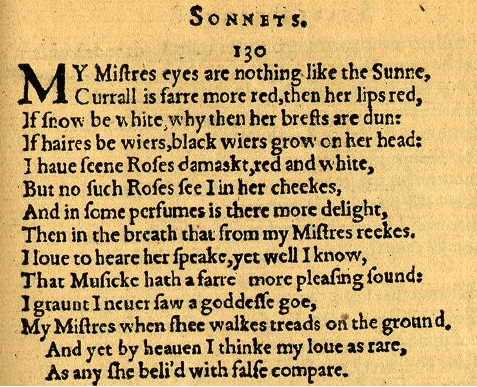








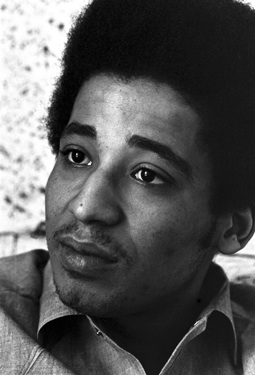





 Bob Dylan's Skipping Reels of Rhyme