“One More Weekend” seems like it was intended to use any rhyming pattern to get what the speaker wants. First, I’ll throw some abab rhyming couplets her way. That oughta work to get that weekend with her. And then I’ll try another, with the best rhyme of the lot in the song, “deck”/”suspect.” But then, to throw her off guard, I’ll try something a bit different, exotic even, aaabcccb, and frame it with two more verses of rhyming couplets. Does it work? In a fun listening, “To His Coy Mistress-like romp, it sure does.
Here’s a ukele bluesey cover version that this band looks like it had fun doing for a 7th Annual Dylan Bday bash:
Slippin’ and slidin’ like a weasel on the run
I’m lookin’ good to see you, yeah, and we can have some fun
One more weekend, one more weekend with you
One more weekend, one more weekend’ll do
Come on down to my ship, honey, ride on deck
We’ll fly over the ocean just like you suspect
One more weekend, one more weekend with you
One more weekend, one more weekend’ll do
We’ll fly the night away
Hang out the whole next day
Things will be okay
You wait and see
We’ll go someplace unknown
Leave all the children home
Honey, why not go alone
Just you and me
Comin’ and goin’ like a rabbit in the wood
I’m happy just to see you, yeah, lookin’ so good
One more weekend, one more weekend with you
One more weekend, one more weekend’ll do (yes, you will!)
Like a needle in a haystack, I’m gonna find you yet
You’re the sweetest gone mama that this boy’s ever gonna get
One more weekend, one more weekend with you
One more weekend, one more weekend’ll do
This song is exclusively a series of terminal rhymed couplets, aa/bb all the way through, except for the end of the verse word “bully,” appearing 11 times, not once rhymed. I see it as a thematic anti-rhyme, bullying its way through the song having the final say 11 times in conflict with the rhymes that dominate. It’s tough being the misunderstood bully, Dylan expresses throughout it, and what’s so tough about it is echoed in the discordance of “bully” vs the world of the rhymes living in the song.
I also would like to give attention to the thematic rhyme in verse 10, “for”/”war” appearing in lines that label the bully as a cause for war:
What’s anybody indebted to him for?
Nothin’, they say. He just likes to cause war
Well, the neighborhood bully, he’s just one man
His enemies say he’s on their land
They got him outnumbered about a million to one
He got no place to escape to, no place to run
He’s the neighborhood bully
The neighborhood bully just lives to survive
He’s criticized and condemned for being alive
He’s not supposed to fight back, he’s supposed to have thick skin
He’s supposed to lay down and die when his door is kicked in
He’s the neighborhood bully
The neighborhood bully been driven out of every land
He’s wandered the earth an exiled man
Seen his family scattered, his people hounded and torn
He’s always on trial for just being born
He’s the neighborhood bully
Well, he knocked out a lynch mob, he was criticized
Old women condemned him, said he should apologize.
Then he destroyed a bomb factory, nobody was glad
The bombs were meant for him. He was supposed to feel bad
He’s the neighborhood bully
Well, the chances are against it and the odds are slim
That he’ll live by the rules that the world makes for him
’Cause there’s a noose at his neck and a gun at his back
And a license to kill him is given out to every maniac
He’s the neighborhood bully
He got no allies to really speak of
What he gets he must pay for, he don’t get it out of love
He buys obsolete weapons and he won’t be denied
But no one sends flesh and blood to fight by his side
He’s the neighborhood bully
Well, he’s surrounded by pacifists who all want peace
They pray for it nightly that the bloodshed must cease
Now, they wouldn’t hurt a fly. To hurt one they would weep
They lay and they wait for this bully to fall asleep
He’s the neighborhood bully
Every empire that’s enslaved him is gone
Egypt and Rome, even the great Babylon
He’s made a garden of paradise in the desert sand
In bed with nobody, under no one’s command
He’s the neighborhood bully
Now his holiest books have been trampled upon
No contract he signed was worth what it was written on
He took the crumbs of the world and he turned it into wealth
Took sickness and disease and he turned it into health
He’s the neighborhood bully
What’s anybody indebted to him for?
Nothin’, they say. He just likes to cause war
Pride and prejudice and superstition indeed
They wait for this bully like a dog waits to feed
He’s the neighborhood bully
What has he done to wear so many scars?
Does he change the course of rivers? Does he pollute the moon and stars?
Neighborhood bully, standing on the hill
Running out the clock, time standing still
Neighborhood bully
“Mr. Tambourine Man” is a treasure trove of rhyming, it is bathed in it; the sounds from it feel poured onto the page and when played they fill the air with a melody that charms while it summons the images the words from it create. Pictures of “one arm waving free,” going under dancing spells, a sky with no “fences facin” remain emblazoned in my memory. It is a skipping reel of rhyme; no, not so much skipping as dynamo-ing. Terminal rhymes punctuate it and the internal and embedded rhymes drive it, casting indeed a spell that the listener can’t help but want to be and stay under.
Sequences like this rival “Subterranean Homesick Blues” in its rapid fire rhyming:
Then take me disappearin’ through the smoke rings of my mind
Down the foggy ruins of time, far past the frozen leaves
The haunted, frightened trees, out to the windy beach
Far from the twisted reach of crazy sorrow
Yes, to dance beneath the diamond sky with one hand waving free
Silhouetted by the sea, circled by the circus sands
With all memory and fate driven deep beneath the waves
Let me forget about today until tomorrow
Here is Dylan singing it live 1964, at the Newport Folk Festival, with a brief intro from Peter Seeger:
Hey! Mr. Tambourine Man, play a song for me
I’m not sleepy and there is no place I’m going to
Hey! Mr. Tambourine Man, play a song for me
In the jingle jangle morning I’ll come followin’ you
Though I know that evenin’s empire has returned into sand
Vanished from my hand
Left me blindly here to stand but still not sleeping
My weariness amazes me, I’m branded on my feet
I have no one to meet
And the ancient empty street’s too dead for dreaming
Hey! Mr. Tambourine Man, play a song for me
I’m not sleepy and there is no place I’m going to
Hey! Mr. Tambourine Man, play a song for me
In the jingle jangle morning I’ll come followin’ you
Take me on a trip upon your magic swirlin’ ship
My senses have been stripped, my hands can’t feel to grip
My toes too numb to step
Wait only for my boot heels to be wanderin’
I’m ready to go anywhere, I’m ready for to fade
Into my own parade, cast your dancing spell my way
I promise to go under it
Hey! Mr. Tambourine Man, play a song for me
I’m not sleepy and there is no place I’m going to
Hey! Mr. Tambourine Man, play a song for me
In the jingle jangle morning I’ll come followin’ you
Though you might hear laughin’, spinnin’, swingin’ madly across the sun
It’s not aimed at anyone, it’s just escapin’ on the run
And but for the sky there are no fences facin’
And if you hear vague traces of skippin’ reels of rhyme
To your tambourine in time, it’s just a ragged clown behind
I wouldn’t pay it any mind
It’s just a shadow you’re seein’ that he’s chasing
Hey! Mr. Tambourine Man, play a song for me
I’m not sleepy and there is no place I’m going to
Hey! Mr. Tambourine Man, play a song for me
In the jingle jangle morning I’ll come followin’ you
Then take me disappearin’ through the smoke rings of my mind
Down the foggy ruins of time, far past the frozen leaves
The haunted, frightened trees, out to the windy beach
Far from the twisted reach of crazy sorrow
Yes, to dance beneath the diamond sky with one hand waving free
Silhouetted by the sea, circled by the circus sands
With all memory and fate driven deep beneath the waves
Let me forget about today until tomorrow
Hey! Mr. Tambourine Man, play a song for me
I’m not sleepy and there is no place I’m going to
Hey! Mr. Tambourine Man, play a song for me
In the jingle jangle morning I’ll come followin’ you
The rhyme scheme in this song is like moonlight, steady and constant, and then suddenly not so, shadowy, ripple-like. Verses 1, 2, 3, 5, 6, 8 of 8 use a/b/b, with all almost perfect rhymes rhyming with the word “alone.” a/a/b/c/c/d patterns the fourth and seventh verses, with a bit more assonance added as kicker to the final rhyming of verse 7: “sea”/”chief”/”thief”/”me.”
Six of the eight verses have terrific internal rhymes creating perhaps what Christopher Ricks recognizes as the song’s “melodious buoyancy.” “losing” with “Susan” and the best one, “crimson” with “limbs an” display an active rhyming mind, one in command of words and sounds.
All this is part poetry, part the way Dylan sings, it, breezy, light with just an edge of pleading, “Won’t you meet me out in the moonlight alone?” over and over again, to end this alone-ness once and for all, the incessant rhyming with “alone” echoing under the moonlight.
The seasons they are turnin’ and my sad heart is yearnin’
To hear again the songbird’s sweet melodious tone
Won’t you meet me out in the moonlight alone?
The dusky light, the day is losing, Orchids, Poppies, Black-eyed Susan
The earth and sky that melts with flesh and bone
Won’t you meet me out in the moonlight alone?
The air is thick and heavy all along the levy
Where the geese into the countryside have flown
Won’t you meet me out in the moonlight alone?
Well, I’m preachin’ peace and harmony
The blessings of tranquility
Yet I know when the time is right to strike
I’ll take you cross the river dear
You’ve no need to linger here
I know the kinds of things you like
The clouds are turnin’ crimson–the leaves fall from the limbs an’
The branches cast their shadows over stone
Won’t you meet me out in the moonlight alone?
The boulevards of cypress trees, the masquerades of birds and bees
The petals, pink and white, the wind has blown
Won’t you meet me out in the moonlight alone?
The trailing moss and mystic glow
Purple blossoms soft as snow
My tears keep flowing to the sea
Doctor, lawyer, Indian chief
It takes a thief to catch a thief
For whom does the bell toll for, love? It tolls for you and me
My pulse is runnin’ through my palm–the sharp hills are rising from
The yellow fields with twisted oaks that groan
Won’t you meet me out in the moonlight alone?
“Masters Of War” is one of the reasons Dylan is so beloved, for his breath of vision to “see through” things to get to the heart of who or what is really to blame for injustice, heartbreak, loss, indignity, etc. Thanks, Bob, for opening up both our minds and hearts for over six decades.
After the first verse, “Masters Of War” follows a rhyming sequence of a/b/c/b/d/e/f/e.
The first verse is a summoning–it begins with an imperative, a command, Come here!–You, You, You, You, You, and then the “I” takes over, and the first rhyme kicks in “desks’/”masks”– words married in rhyme for a perfect image that will matter throughout the song. It’s not the despot, not the government, not the soldiers who are to be blamed for the ghastly fallout of war. No, but those who make the bombs, those who design them, those who sign off on them behind the safety of their desks.
This is a song with biting invectives hurled with a velocity and a capacity for sarcasm and irony that would define Dylan and still does.
It’s a song that should stay in people’s faces to continue to unmask the real faces of destruction, greed, and brutality.
Here he is singing it live when he received the Grammy Lifetime Achievement Award in 1991.
Come you masters of war
You that build all the guns
You that build the death planes
You that build the big bombs
You that hide behind walls
You that hide behind desks
I just want you to know
I can see through your masks
You that never done nothin’
But build to destroy
You play with my world
Like it’s your little toy
You put a gun in my hand
And you hide from my eyes
And you turn and run farther
When the fast bullets fly
Like Judas of old
You lie and deceive
A world war can be won
You want me to believe
But I see through your eyes
And I see through your brain
Like I see through the water
That runs down my drain
You fasten the triggers
For the others to fire
Then you set back and watch
When the death count gets higher
You hide in your mansion
As young people’s blood
Flows out of their bodies
And is buried in the mud
You’ve thrown the worst fear
That can ever be hurled
Fear to bring children
Into the world
For threatening my baby
Unborn and unnamed
You ain’t worth the blood
That runs in your veins
How much do I know
To talk out of turn
You might say that I’m young
You might say I’m unlearned
But there’s one thing I know
Though I’m younger than you
Even Jesus would never
Forgive what you do
Let me ask you one question
Is your money that good
Will it buy you forgiveness
Do you think that it could
I think you will find
When your death takes its toll
All the money you made
Will never buy back your soul
And I hope that you die
And your death’ll come soon
I will follow your casket
In the pale afternoon
And I’ll watch while you’re lowered
Down to your deathbed
And I’ll stand o’er your grave
’Til I’m sure that you’re dead
The terminal rhymes in this song are consistent throughout; the pattern is a/a/b/cc. The first is a wrenched rhyme, “catch”/”outstretched”–listen to how Dylan sings it to force a unity of sound. The last two lines of each verse have words that rhyme with “peace,” so that word is sounded and echoed throughout; those rhyming words are “priest,” “grease,” “Police,” “least,” “feast,” “beast,” “cease,” and “East,” a collection that ebbs and flows between unrest and peace.
Each middle line of each five line verse has no rhyme. Here’s how they’d be together as one verse:
Could be the Führer
Good intentions can be evil
Nobody can see through him
He could be standing next to you
I can smell something cooking
He’ll put both his arms around you
Wanna get married? Do it now
And he’s following a star
What I like from doing this is how the variety of pronouns stand out for me more: the silent “He” in the first line (lots of imperatives opening each line–“YOU Look out your window . . .” the song begins), nobody, him, he, you, I, he, you, silent “You” in the seventh line, he.
He’s everywhere, this man of peace, and we’re all involved. Sometimes with Dylan what doesn’t rhyme matters as much as what rhymes, or both or neither. The pleasure in this is that Dylan is playing with words and sound, and we can play, too, his songs, and with him.
Here’s Dylan singing it live with Tom Petty in 1984.
Look out your window, baby, there’s a scene you’d like to catch
The band is playing “Dixie,” a man got his hand outstretched
Could be the Führer
Could be the local priest
You know sometimes Satan comes as a man of peace
He got a sweet gift of gab, he got a harmonious tongue
He knows every song of love that ever has been sung
Good intentions can be evil
Both hands can be full of grease
You know that sometimes Satan comes as a man of peace
Well, first he’s in the background, then he’s in the front
Both eyes are looking like they’re on a rabbit hunt
Nobody can see through him
No, not even the Chief of Police
You know that sometimes Satan comes as a man of peace
Well, he catch you when you’re hoping for a glimpse of the sun
Catch you when your troubles feel like they weigh a ton
He could be standing next to you
The person that you’d notice least
I hear that sometimes Satan comes as a man of peace
Well, he can be fascinating, he can be dull
He can ride down Niagara Falls in the barrels of your skull
I can smell something cooking
I can tell there’s going to be a feast
You know that sometimes Satan comes as a man of peace
He’s a great humanitarian, he’s a great philanthropist
He knows just where to touch you, honey, and how you like to be kissed
He’ll put both his arms around you
You can feel the tender touch of the beast
You know that sometimes Satan comes as a man of peace
Well, the howling wolf will howl tonight, the king snake will crawl
Trees that’ve stood for a thousand years suddenly will fall
Wanna get married? Do it now
Tomorrow all activity will cease
You know that sometimes Satan comes as a man of peace
Somewhere Mama’s weeping for her blue-eyed boy
She’s holding them little white shoes and that little broken toy
And he’s following a star
The same one them three men followed from the East
I hear that sometimes Satan comes as a man of peace
The title of this song is a mathematical equation (Dylan himself called it a “sort of fraction”), and the rhyming in it parallels the symmetry and order of math. The first, a/a/b/c/d/d/d/c (love that “fire”/”buy her” rhyme). The following verses show variation with an a/a/b/c/d/e/f/b pattern, and with their own variations of that. The second verse begins a/a/a, and in verses three and four, “another”/”bother” and “rainy”/”raven” join in on the rhyming, imperfect as they are. But this can be a song about perfection and imperfection (like as Christopher Ricks observed, the silence of Cordelia’s love for her father King Lear), a lover like a raven with a broken wing, so I enjoy seeing where there is rhyming perfection with some brokenness of it. Perfect love, impossible, perfect in one’s imperfection, oh yeah, quite possible. Lovely, in fact, in how human that is. And watch for the words that don’t rhyme in this song; as Ricks says, “It is a lovely touch, this not rhyming.”
My love she speaks like silence
Without ideals or violence
She doesn’t have to say she’s faithful
Yet she’s true, like ice, like fire
People carry roses
Make promises by the hours
My love she laughs like the flowers
Valentines can’t buy her
In the dime stores and bus stations
People talk of situations
Read books, repeat quotations
Draw conclusions on the wall
Some speak of the future
My love she speaks softly
She knows there’s no success like failure
And that failure’s no success at all
The cloak and dagger dangles
Madams light the candles
In ceremonies of the horsemen
Even the pawn must hold a grudge
Statues made of matchsticks
Crumble into one another
My love winks, she does not bother
She knows too much to argue or to judge
The bridge at midnight trembles
The country doctor rambles
Bankers’ nieces seek perfection
Expecting all the gifts that wise men bring
The wind howls like a hammer
The night blows cold and rainy
My love she’s like some raven
At my window with a broken wing
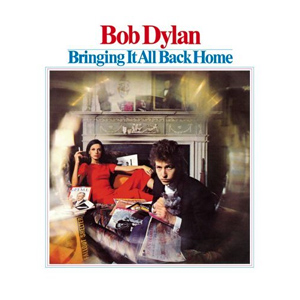
Here’s a beautiful 1965 cut from a Bringing It All Back Home studio session (thanks ralfsu!).
The first verse in “Long Time Gone” has terminal single rhyming with the second, fourth, and sixth lines. The final word in the verse “gone” is an illogical rhyme–“gone” looks like it should rhyme with the other terminal rhymes, but doesn’t. The rest of the verses have only the single rhyme ending the second and fourth lines, “plains”/”age” a bit of an assonance stretch. The rest of the rhyming energy appears internally (“around”/”towns”/”somehow”, “times”/”tried”/”eyes”) but mostly centered at the end of the bridge line, also the title, with the word “gone.” But most are words that look like they should rhyme but don’t–more printers or illogical eye rhymes: “belong,” “one,” “long,” “done,” “son.” Only the third and last verse end in rhyme, “on”/”gone”, “upon”/”gone.” That last one indeed, a long time gone.
My parents raised me tenderly
I was their only son
My mind got mixed with ramblin’
When I was all so young
And I left my home the first time
When I was twelve and one
I’m a long time a-comin’, Maw
An’ I’ll be a long time gone
On the western side of Texas
On the Texas plains
I tried to find a job o’ work
But they said l’s young of age
My eyes they burned when I heard
“Go home where you belong!”
I’m a long time a-comin’
An’ I’ll be a long time gone
I remember when I’s ramblin’
Around with the carnival trains
Different towns, different people
Somehow they’re all the same
I remember children’s faces best
I remember travelin’ on
I’m a long time a-comin’
I’ll be a long time gone
I once loved a fair young maid
An’ I ain’t too big to tell
If she broke my heart a single time
She broke it ten or twelve
I walked and talked all by myself
I did not tell no one
I’m a long time a-comin’, babe
An’ I’ll be a long time gone
Many times by the highwayside
I tried to flag a ride
With bloodshot eyes and gritting teeth
I’d watch the cars roll by
The empty air hung in my head
I’s thinkin’ all day long
I’m a long time a-comin’
I’ll be a long time gone
You might see me on your crossroads
When I’m a-passin’ through
Remember me how you wished to
As I’m a-driftin’ from your view
I ain’t got the time to think about it
I got too much to get done
Well, I’m a long time comin’
An’ I’ll be a long time gone
If I can’t help somebody
With a word or song
If I can’t show somebody
They are travelin’ wrong
But I know I ain’t no prophet
An’ I ain’t no prophet’s son
I’m just a long time a-comin’
An’ I’ll be a long time gone
So you can have your beauty
It’s skin deep and it only lies
And you can have your youth
It’ll rot before your eyes
Just give to me my gravestone
With it clearly carved upon:
“I’s a long time a-comin’
An’ I’ll be a long time gone”
Here’s a haunting of Odetta singing it from her album, Odetta Sings Dylan:
This blog will take a decidedly different turn. My focus on the “me” rhyme in Dylan sent a clear message that I was taking on too much, and that a better approach was needed so I could actually accomplish something with Dylan and rhymes within a normal life span. So from here on out, I plan to examine the rhyming pattern in each of his songs and try to draw some conclusions, some grounded, some farfetched, but all with the intention of having some literary fun with Dylan’s rhyming words and patterns. I plan to continue this quest with a little help from my scholarly brethren like Christopher Ricks, Michael Gray, Robert Shelton and the like, and the actual Dylan concordance will grow and at a faster rate. Stay tuned, friends, and I hope you follow me down this new path, and thanks for reading.
“Me” is going to be an interesting rhyming word to explore in Dylan’s oeuvre. Through it, the man in him may actually be revealed a bit. I’m going to venture a guess that “me” appears more from Blood On The Tracks onward, in that that album marks a path toward more personal, even confessional songwriting. Not that we don’t have personal songs from him before 1974, e.g., “Boots Of Spanish Leather,” “Ballad In Plain D,” and the like, but back then his finger pointing songs directed attention away from him to others. But as with any finger pointing, three more fingers were always pointing back at him, and the “me,” which is a word found in every one of his last two albums, came bursting on the scene in Blood On The Tracks (based on Chekhov short stories?? Really Bob?)
The word explored through its rhymes also will help identify points of view in each song. And as with any word that ends in a vowel, it can go on for as long a singer’s breath can last. Think of how Dylan screams, the word “you” on the Before The Flood version of “Like A Rolling Stone”:
Once upon a time you dressed so fine
You threw the bums a dime in your prime, didn’t yoooooooooooooooooooooooooou?
People’d call, say, “Beware doll, you’re bound to fall”
You thought they were all kiddin’ yooooooooooooooooooooooooooooooooooooooou
Not one “me” in that song by the way; it’s all about “you” or her. But there’s lots of rhyming “me‘s” at the end of lines in Dylan songs. Not quite like being at the end of one’s rope, though there’s a lot of Dylan songs about what that’s like, too. At the end the line mostly is where the “me” in Dylan will be studied in this post. I’m sure we’ll find Dylan there but many of ourselves in a lot of those “me’s” as well.
“me” ends each verse of “Life is Hard,” but it rhymes with only one word in the song, and that word is “be”:
The evening winds are still
I’ve lost the way and will
Can’t tell you where they went
I just know what they meant
I’m always on my guard
Admitting life is hard
Without you near me
The friend you used to be
So near and dear to me
You slipped so far away
Where did we go a-stray
I pass the old schoolyard
Admitting life is hard
Without you near me
It’s a spillover rhyme though so the lack of rhyming at the of each verse with “me” is consistent. “me sandwiches” “be”–the speaker’s being the lover he speaks of the center of his “me“-ness.
Life is hard, maybe even possible without her.
I’d venture to say that just about every Dylan album has a can’t live without her song; the first perhaps being “Girl From The North Country.” Here’s Bob singing it with Johnny Cash:
“When I first heard “If You Ever Go To Houston,” ah, yes, one of Bob’s familiar advice givings songs a la “Subterranean Homesick Blues,” but then I thought why Houston? He could have picked anywhere, but not if you’re looking for a city in the US that has the sound “you” in it, Youston! And this song is about you and me, as it is with most of Dylan’s songs, and the rhymes with “me” in the next to last verse demonstrate the you/me relationship that I think Dylan wants going on or at least going on for our ears to hear:
Mr. Policeman
Can you help me find my gal
Last time I saw her
Was at the Magnolia Hotel
If you help me find her
You can be my pal
Mr. Policeman
Can you help me find my gal
It ends with the teasingly pleasing “be my pal”/”me find my gal.”
Advice? Yes, if you ever go to Houston, but in Youston expect to find me.
Any song with the title “This Dream of You” is going to be more about the “me” than the “you.” The chorus maintains a you/me interplay, appearing four times in a six verse song:
All I have and all I know
Is this dream of you
Which keeps me living on
But the “me” rhyme is with “see” in the first line of a non-chorus verse:
“Am I too blind to see, is my heart playing tricks on me.”
The me in the song is questioning himself, lost, directionless but for the dreams of a you whose value is everything to him–all he has and all he knows. It’s one of Bob’s pining for, yearning for songs.
It’s the kind of song he doesn’t want to give up; at least one appears in just about every album. In them, the “you’s” mean so much to the “me‘s.” And we, the listener, can be either one.
Here’s an audio of it live from Manitoba, Canada, 2012 (starts around 27:30).
There’s a terrific internal rhyme in the last stanza of “Duquesne Whistle”: “know me” with “oak tree’s:
The lights on my lady’s land are glowing
I wonder if they’ll know me next time ’round
I wonder if that old oak tree’s still standing
That old oak tree, the one we used to climb
“oak tree” repeats in the last line and the “e” vowel keeps the assonance alive when “me” turns into “we.” The “know me“/”oak tree” is a mosaic rhyme, and the whole song is a mosaic or sorts, with shifting and lively images rolling as if down a track, episodic even, like scenes taken in from inside a train.
Here’s the Dylan-approved video of the song again; it’s violent, as is several of his latest, but it’s got the Charlie Chaplin-esque figure and enough of Dylan himself scattered through it to disrupt the love/unrequited storyline to keep the mosaic feel alive:
“me” helps the rock n’ roll of “Narrow Way,” appearing in the refrain that’s repeated eleven times:
It’s a long road, it’s a long and narrow way
If I cant work up to you, you’ll surely have to work down to me someday.
As a Dylan word, “me” does seem to be one that other rhyming words have to look up to in terms of quantity. In this song, “me” appears three times in rhyme, once with “sea”:
Yesterday, I could’ve thrown them all in the sea
Today, even one, may be too much for me
once, with “baby” internally:
Can’t walk them baby, you could do no wrong
Put your arms around me, where they belong
and once as a medial rhyme with “sleep” coupled with “weep” for an ensuing couplet:
You can guard me, while I sleep
Piss away, the tears I weep
The song is packed with terminal rhyming–every line ends in rhyme, while the separation of “you” and me” is just about guaranteed by the refrain’s continual threat that if I can’t get up to you, you have to get down to me. “you” and “me” are never going to get together in this song, but the rhyming is endlessly coupling.
“me” appears in a rhyming way twice in “Long And Wasted Years.” Once within the first ten lines with “see’:
is there a place we can go, is there anybody we can see?
maybe,
it’s the same for you as it is for me
and then in a sneaky internal rhyme with “behind” towards the end of the song:
I think that when my back was turned,
the whole world behind me burned
That’s a stretch, right? The terminal rhyme, “turned”/”burned” is the one that matters there. The song is another you and me song or you vs me, but the lines with the “turned”/”burned” are non sequiturs–out of no where statements (seemingly) like the one Michael Gray admires in “Lonesome Day Blues,” “I wish my mother was still alive.” Another in this song is, “I wear dark glasses to cover my eyes.”
Listen for the rhymes; they please in this song, as they do, in all of Bob’s writing, but listen for those non sequiturs–they tell another story, maybe the real story. Here he is live, singing it Stockholm fall of 2013. His voice actually sounds pretty good.
In “Scarlet Town,” Dylan keeps to rhyming couplets and mostly perfect rhymes, the “me“/”he” rhyme in the second verse being one of them:
Scarlet Town in the month of May
Sweet William Holme on his deathbed lay
Mistress Mary by the side of the bed
Kissin’ his face and heapin’ prayers on his head
So brave, so true, so gentle is he
I’ll weep for him as he would weep for me
Little Boy Blue come your blow horn
In Scarlet Town, where I was born
In the beginning of the song where the town is depicted as perfect, bravery in the face of death, the promise of reciprocal weeping, and fairy tales references, perfect rhyming makes sense. Later though, we sneak a peek at what’s under the covers of perfection and we see torn hems, the end being near, and hearts on platters.
Dylan tells us that evil and good live side by side in Scarlet Town–one side, the left side imperfect, no rhymes, right side, all perfect rhymes, or just about, in Scarlet Town, where “All things are beautiful in their time.”
Dylan singing it live, March 2013, upright at piano (thanks, D. Cantu):
In light of how some of us still look so forward to seeing Bob or anticipate the arrival of new songs, the following verse from “Early Roman Kings” may sound a bit over the top in its hubris:
One day
You will ask for me
There’ll be no one else
That you’ll wanna see
Of course, this is not Bob singing about Bob–its a condemnation of those kings who acted like, well, kings. The speaker is “I” though, but it can be anyone driven by power, those even who made Detroit fall as the last verse alludes:
I was up on black mountain
The day Detroit fell
They killed ’em all off
And they sent ’em to hell
“Detroit made cars and cars made America,” he says in this superbowl commercial. Is that “Things Have Changed” I hear in the background?

 “Mr. Tambourine Man” is a treasure trove of rhyming, it is bathed in it; the sounds from it feel poured onto the page and when played they fill the air with a melody that charms while it summons the images the words from it create. Pictures of “one arm waving free,” going under dancing spells, a sky with no “fences facin” remain emblazoned in my memory. It is a skipping reel of rhyme; no, not so much skipping as dynamo-ing. Terminal rhymes punctuate it and the internal and embedded rhymes drive it, casting indeed a spell that the listener can’t help but want to be and stay under.




 Bob Dylan's Skipping Reels of Rhyme